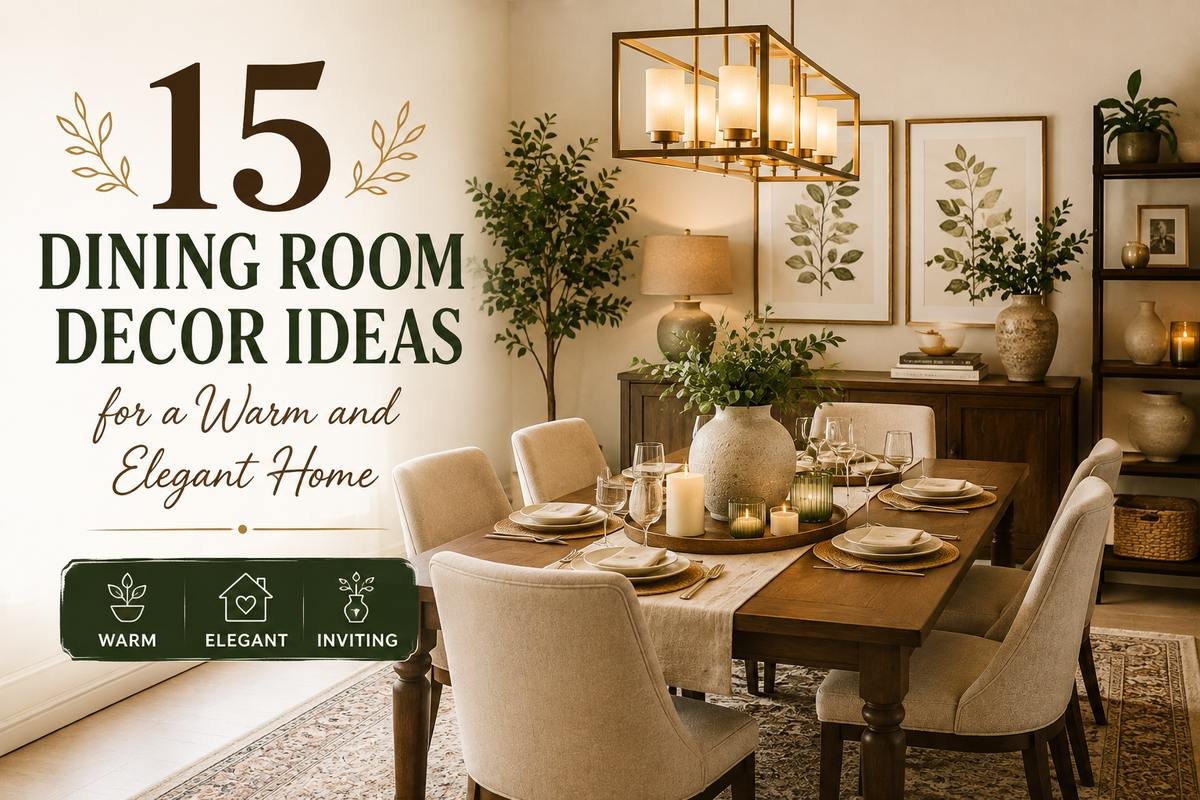
The dining room is more than a place where meals are served. It is where families gather, guests sit together, and everyday conversations happen around the table. A thoughtfully decorated dining area can make these moments feel more comfortable while giving your home a polished appearance.
You do not need expensive furniture or a complete renovation to create an inviting dining space. Small changes to lighting, table accessories, wall decoration, colours, and storage can make a noticeable difference.
If you are looking for practical dining room decor ideas, here are 15 ways to create a warm and elegant space without making it feel overly formal.
1. Choose a Dining Table That Fits the Room
The dining table should be the starting point of your design.
Before choosing one, measure the available area and consider how many people normally use it. A large table can overwhelm a compact room, while a very small table may look lost in a spacious area.
Round tables can work nicely in smaller dining spaces, while rectangular tables are useful for longer rooms.
Leave enough space around the table for people to pull out chairs and walk comfortably.
A beautiful table is valuable, but the right proportions are even more important.
2. Create a Warm Lighting Setup
Lighting can completely change the atmosphere of a dining area.
A pendant light or chandelier positioned above the table can become a visual focal point. For a softer evening atmosphere, choose warm-toned lighting rather than extremely bright white light.
You can also combine the main fixture with nearby lamps or subtle accent lighting.
If your dining area has artwork, shelves, or decorative objects, small lights can help highlight those features.
The goal is to make the dining area comfortable rather than overly bright.
3. Add a Simple Table Centrepiece
A dining table does not need to be covered with accessories.
One carefully selected centrepiece can be enough.
Consider using:
- A decorative vase
- A shallow tray
- A small plant arrangement
- A candle holder
- A bowl with natural elements
- A simple floral arrangement
Keep the centrepiece low enough that people can see across the table.
For everyday use, a simple arrangement is often more practical than an elaborate display.
4. Use a Decorative Tray
A decorative tray can help organize several small objects into one visual group.
Place a tray in the centre of the table and add a vase, candle, or small decoration piece.
You can remove the complete arrangement quickly when it is time to serve food.
Trays can also be placed on a sideboard, console, or nearby shelf.
This makes them useful both for styling and everyday organization.
5. Introduce Natural Materials
Natural-looking materials can make a dining area feel warmer.
Wood, ceramic, woven materials, stone, glass, and natural fabrics can all add visual variety.
For example, a wooden dining table can be paired with ceramic accessories and woven placemats.
The combination prevents the room from feeling too uniform.
You don’t need to use every material at once. Two or three complementary textures are usually enough.
6. Decorate the Wall Behind the Dining Table
An empty wall can become an important feature of your dining room.
You could use:
- Framed artwork
- A large decorative mirror
- Botanical prints
- Decorative plates
- A gallery arrangement
- Textured wall decoration
When selecting wall decor, consider the size of the table below it.
A tiny artwork above a large dining table may look disconnected, while an oversized arrangement can dominate the room.
Choose something that visually relates to the furniture and colour palette.
7. Use Wall Art to Add Personality
Wall art is an easy way to introduce colour and character.
Instead of selecting artwork simply because you like the image, consider how its colours work with your dining chairs, curtains, table, and other home decor items.
For a neutral dining room, artwork can introduce a stronger accent colour.
If the room already contains several bold colours, simpler artwork may create better balance.
8. Add a Mirror for More Visual Space
A mirror can make a dining area feel brighter and more open.
Place one where it can reflect natural light, a decorative light fixture, or an attractive part of the room.
Round and arched mirrors can soften rooms dominated by rectangular furniture.
A large mirror can also become a statement feature above a sideboard.
Just make sure it is securely installed and positioned where it will not create uncomfortable reflections for people sitting at the table.
9. Choose Comfortable Dining Chairs
Good dining room design should not sacrifice comfort.
Look for chairs that provide enough support and suit the height of your table.
You can use matching chairs for a clean appearance or combine slightly different styles for a more relaxed look.
If your existing chairs are structurally sound but look tired, consider replacing their cushions or refreshing the upholstery.
Sometimes updating the seating is enough to change the character of the whole dining area.
10. Add a Sideboard or Storage Cabinet
A sideboard can provide both storage and decorating space.
Use it to store tableware, serving items, linens, or other belongings.
The top can hold a vase, mirror, artwork, lamp, or a few carefully selected decorative pieces.
This is particularly useful when you want your dining room to look organized.
Good storage can also reduce clutter and help the room maintain a cleaner appearance.
11. Bring in Greenery
Plants can add life to an otherwise neutral dining room.
A medium-sized plant can work beside a sideboard or in an empty corner.
Smaller plants can sit on shelves or cabinets.
If your dining area receives limited sunlight, choose plants that are appropriate for indoor conditions. Artificial greenery can also be an option when maintaining live plants is difficult.
Avoid filling the dining room with too many plants. A few well-positioned pieces can have more impact.
12. Create a Balanced Colour Palette
Colour plays a major role in how a dining room feels.
Warm neutrals such as beige, cream, soft brown, and muted green can create a relaxed environment.
You can then introduce a darker or richer accent through chairs, artwork, cushions, curtains, or decorative accessories.
Try repeating an accent colour in two or three locations.
For example, a muted green could appear in artwork, a plant pot, and a small table accessory.
This creates a visual connection without making everything identical.
13. Use Textiles to Soften the Space
Hard furniture surfaces can sometimes make a dining area feel cold.
Textiles can add softness.
Consider using:
- A table runner
- Fabric dining chairs
- Curtains
- Seat cushions
- A suitable area rug
If you use a rug beneath the dining table, choose one large enough for chairs to remain on the rug when pulled away from the table.
Select materials that are practical to clean, especially if the dining area is used frequently.
14. Style Open Shelves Carefully
If your dining room has open shelving, don’t fill every section.
Use a combination of useful and decorative objects.
For example, you could display:
- Ceramic serving pieces
- Small vases
- Books
- Decorative bowls
- Plants
- Glassware
Vary the height and shape of the objects to avoid a repetitive appearance.
Leaving some empty space between groups will make the shelves easier to look at and maintain.
15. Keep the Dining Room Personal
A stylish dining room should still feel like part of your home.
Add details that have meaning to you. Family photographs, handmade ceramics, artwork, travel souvenirs, or objects with sentimental value can make the space feel more personal.
You don’t need to follow every interior trend.
The strongest home decor choices are often the ones that fit your lifestyle and the way you actually use the room.
Dining Room Decor for Pakistani Homes
For homeowners searching for home decor Pakistan inspiration, dining rooms can combine contemporary furniture with traditional influences.
A modern wooden dining table can work beautifully with patterned textiles, handcrafted-looking ceramics, warm metallic accessories, or artwork inspired by local design.
The important thing is balance.
You can introduce traditional details without making the entire room feel dated. Similarly, modern pieces can be softened with natural textures and warmer colours.
If you are shopping for home decor items, consider how each product works with the pieces you already own rather than buying everything in the same style.
How to Avoid Overdecorating Your Dining Room
A common decorating mistake is adding too many accessories.
The dining table needs usable space. Chairs need room to move. Sideboards should not become crowded with objects.
Before purchasing another item, look at the room as a whole.
Ask yourself:
Does this piece improve the space, or does it simply fill an empty area?
If the room already feels balanced, you may not need anything else.
Sometimes removing one unnecessary object creates a more elegant result than adding another.
Build Your Dining Space Gradually
You don’t have to complete your dining room in one weekend.
Start with the essentials: the table, chairs, and lighting.
Then add wall decoration, storage, plants, textiles, and smaller accessories as needed.
This gradual approach gives you time to understand what the room actually needs.
At Realfound, you can explore decorative products and accessories that can complement different areas of your home, including dining spaces, living rooms, bedrooms, and entryways.
Final Thoughts
A warm and elegant dining room does not depend on expensive furniture.
The right table size, comfortable seating, thoughtful lighting, natural textures, suitable wall decor, and a few carefully chosen decorative pieces can transform the atmosphere.
Whether you are updating a small dining corner or styling a larger room, focus on comfort first and decoration second.
Choose pieces that work together, leave enough breathing space, and allow the dining area to remain practical for everyday life.
That combination of function and personality is what turns a dining room into a space people genuinely enjoy using.