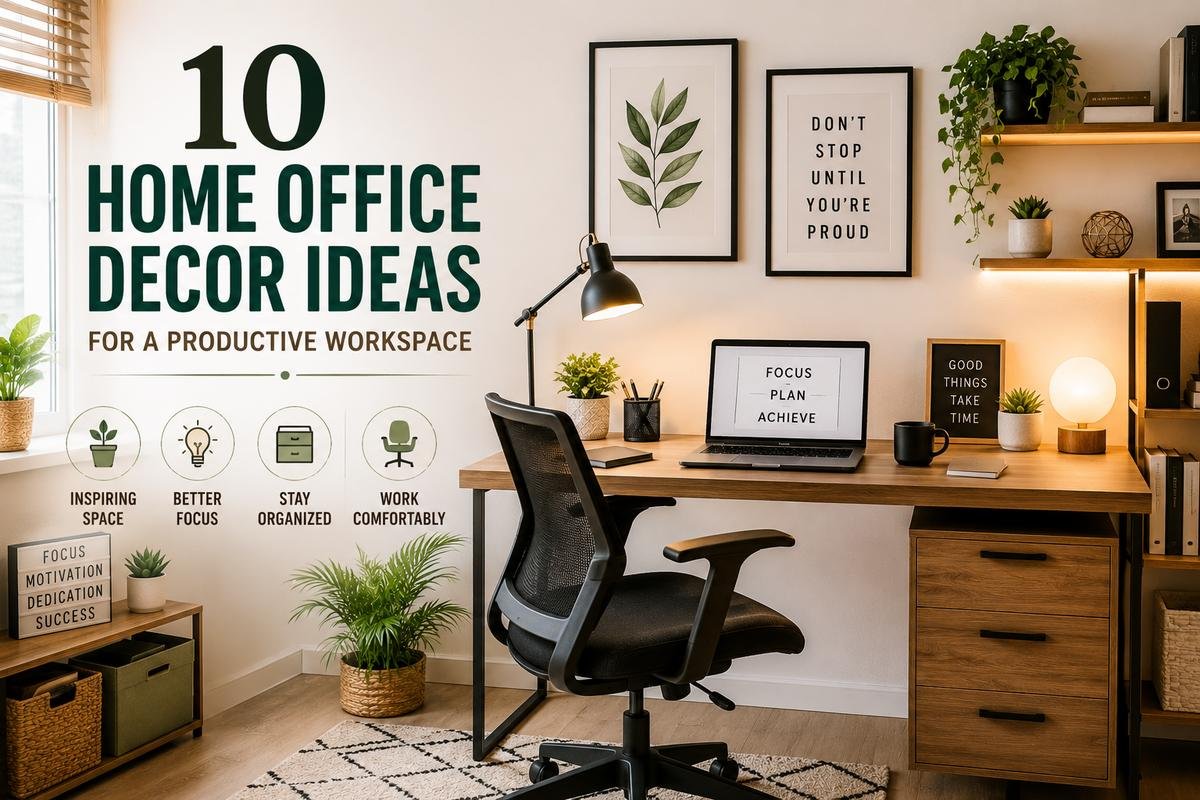
A home office should be more than a desk and a chair. It should be a space where you can concentrate, stay organized, and feel comfortable while working.
The good news is that you do not need a large room or an expensive renovation to create an attractive workspace. With thoughtful home decor ideas, suitable lighting, practical storage, and a few well-chosen decorative items, even a small corner can become a useful home office.
Here are 10 simple ideas to help you create a productive and stylish workspace.
1. Start With a Comfortable Desk
Your desk is the main part of the workspace, so choose one that fits both your room and your daily routine.
A compact desk can work well in a bedroom or small room, while a wider desk gives you more space for a computer, notebooks, accessories, and other equipment.
Avoid choosing a desk simply because it looks attractive. Think about how much surface area you actually need.
A clean, appropriately sized desk can immediately make your office feel more organized.
2. Choose a Comfortable Chair
You may spend several hours sitting at your desk, so comfort should be a priority.
Look for a chair that provides proper support and allows you to work without constantly changing your position.
If your chair looks too plain, you can introduce style through a cushion or a nearby decorative piece rather than sacrificing comfort for appearance.
A productive workspace should feel good to use every day.
3. Make Natural Light Work for You
If possible, position your desk near a window.
Natural light can make a workspace feel brighter and more welcoming during the day. It can also prevent the room from feeling closed in.
Avoid placing your computer screen directly where strong sunlight creates distracting reflections.
Curtains or blinds can help control brightness when necessary.
The window area itself can also become part of your overall room decor.
4. Add a Useful Desk Lamp
Natural light will not be enough once the sun goes down.
A desk lamp provides focused illumination and can also become an attractive part of your office design.
Choose a lamp that fits the scale of your desk. A large lamp can overwhelm a small workstation, while a tiny lamp may not provide enough light.
Warm lighting can make the office feel comfortable in the evening, while brighter task lighting can be useful when reading or writing.
5. Keep Your Desk Visually Clear
An overloaded desk can make it difficult to concentrate.
Instead of keeping everything within reach, decide which items actually need to remain on the desktop.
Use organizers, drawers, boxes, or shelves for things you use less frequently.
A simple arrangement might include your computer, lamp, notebook, and one small decoration piece.
The goal is not to make the desk completely empty. It is to give every important item a logical place.
6. Use Shelves for Storage and Style
Wall shelves can provide valuable storage without taking up floor space.
You can use them for books, stationery, small plants, storage boxes, and carefully selected home decor items.
Try mixing practical objects with decorative pieces.
For example, place a few books beside a small vase or decorative object. This creates a more personal workspace while keeping the shelves useful.
Don’t fill every available section. Leaving some open space can make the arrangement look cleaner.
7. Add Wall Art Above Your Desk
The wall behind your desk does not have to remain empty.
A framed print, artwork, photograph, or simple gallery arrangement can give the workspace more personality.
When choosing wall art, consider the colours already present in your desk, chair, curtains, and other furniture.
If your office has neutral colours, artwork can introduce a subtle accent.
You can also use minimalist wall decor if you prefer a cleaner appearance.
8. Bring in a Small Plant
A little greenery can make a workspace feel more lively.
Place a small plant on your desk, shelf, or nearby cabinet.
If your workspace has limited natural light, select a plant that suits those conditions. You can also use artificial greenery if regular plant care is not practical.
A plant should complement the room rather than occupy valuable working space.
9. Create a Consistent Colour Scheme
Too many unrelated colours can make a small workspace feel visually busy.
Choose a simple palette and repeat a few shades throughout the room.
For example, you could combine:
- Warm white
- Natural wood
- Soft green
- Black accents
Another option could be beige, brown, cream, and muted blue.
Your colour choices can appear in furniture, artwork, storage boxes, curtains, rugs, and small decorative items.
A consistent palette makes even a basic office feel more thoughtfully designed.
10. Make Organization Part of the Decor
Storage does not need to look boring.
Choose attractive organizers, baskets, boxes, trays, or containers that complement the rest of the room.
Use them to manage cables, stationery, documents, notebooks, and small accessories.
This is especially useful if your home office is also part of a bedroom or living room.
When everything has a designated location, the workspace becomes easier to maintain.
Home Office Decor for Small Spaces
You don’t need a separate room to create a functional home office.
A narrow desk can fit beside a bedroom wall, inside a living room corner, or beneath a window.
Vertical storage is particularly useful when floor space is limited.
Instead of adding another cabinet, consider wall shelves or a compact organizer.
You can also use a decorative screen or furniture arrangement to visually separate the work area from the rest of the room.
This approach allows your workspace to remain part of the home without taking over the entire room.
Add Personality Without Creating Clutter
Your office should reflect your personality, but too many accessories can become distracting.
Choose a few things you genuinely enjoy.
A small sculpture, framed print, decorative vase, candle, or meaningful photograph can make the space feel personal.
These small home decor additions can turn a purely functional desk into an environment that feels like your own.
The key is moderation.
Think About Function Before Decoration
When planning a workspace, ask yourself what you actually do there.
Do you spend most of the day using a computer?
Do you frequently write by hand?
Do you need space for documents?
Do you attend online meetings?
Your answers should influence your furniture and storage choices.
For example, someone who works with paperwork may need more surface area and filing storage, while someone who works primarily on a laptop may prefer a smaller minimalist setup.
Good home improvement does not always mean adding more things. Sometimes it means making the existing space work better.
Create a Workspace That Fits Your Home
A home office should not feel disconnected from the rest of your interior.
If your home has modern furniture, choose office pieces with clean lines. If your home uses natural materials and warm colours, introduce wood, woven textures, and neutral accessories into the workspace.
This creates a smoother connection between your office and the rest of your home decor Pakistan style.
At Realfound, you can explore decorative products and practical accessories that can help you style different areas of your home, from workspaces and bedrooms to living and dining areas.
Final Thoughts
Creating a productive home office does not require a major makeover.
Start with a suitable desk and comfortable chair. Improve the lighting, organize your supplies, add useful storage, and introduce a few decorative touches.
Then step back and look at the space as a whole.
A workspace should support your routine rather than make it more complicated. When comfort, organization, and room decor work together, even a small corner of your home can become a pleasant place to work.
The best office is not necessarily the most expensive one. It is the one that helps you stay comfortable, focused, and organized throughout the day.