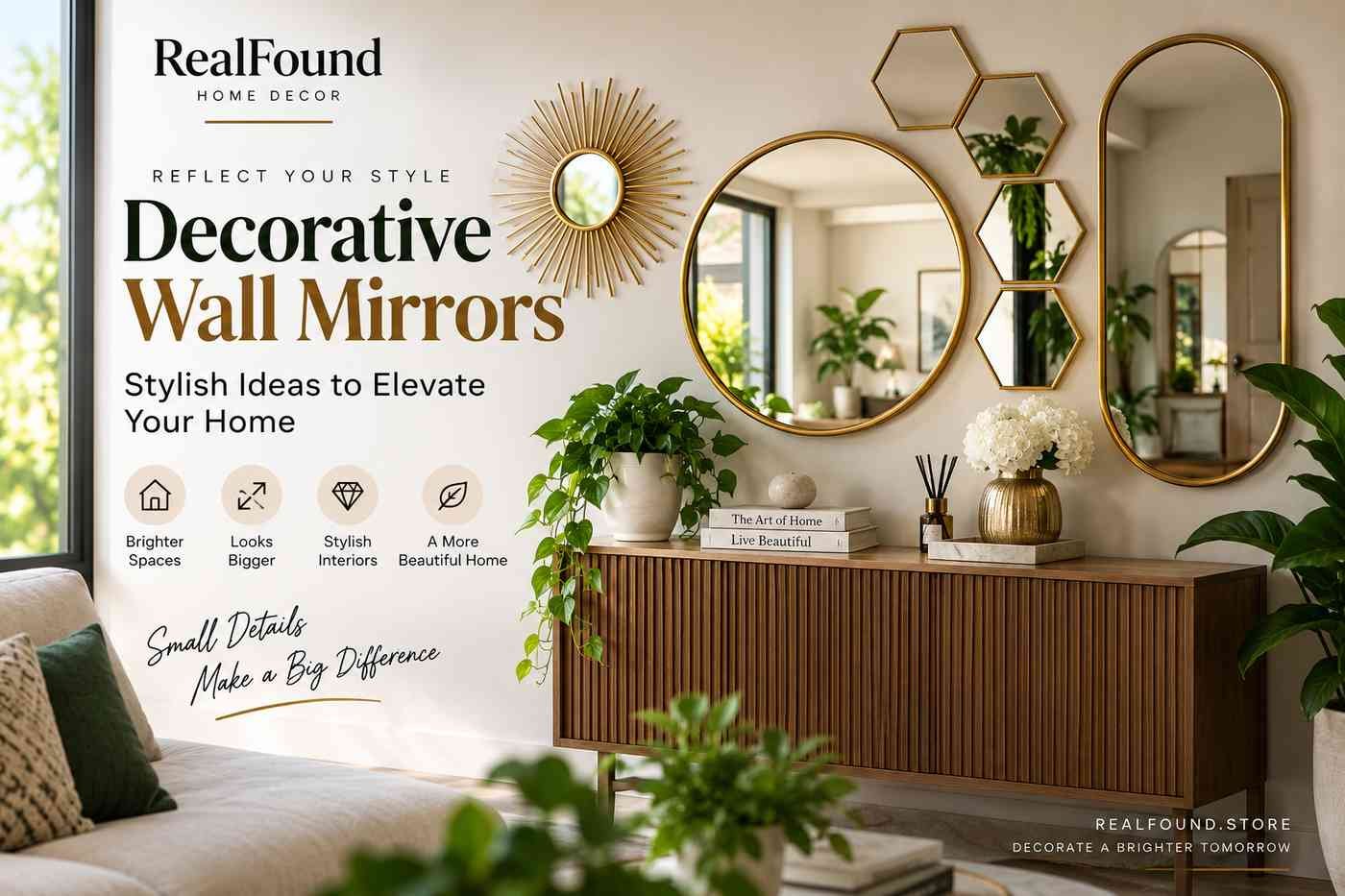
A well-chosen mirror can do much more than help you check your appearance. Decorative wall mirrors can make a room feel brighter, create the impression of more space, and add an attractive finishing touch to your interior.
From modern geometric designs to elegant statement pieces, wall mirrors are available in styles that work with almost every type of home décor. They can become a focal point in a living room, add character to a bedroom, or make a narrow entryway feel more welcoming.
If you are looking for a simple way to refresh your home without replacing your furniture, adding a decorative mirror to an empty wall can make a noticeable difference.
What Makes Decorative Wall Mirrors a Good Home Décor Choice?
Mirrors are naturally versatile. Unlike many decorative accessories that simply occupy a surface, a mirror interacts with light and the surrounding space.
A strategically placed mirror can reflect natural light from a window, helping a room appear brighter. It can also visually expand a compact area by creating additional depth.
At the same time, the frame and shape of a mirror can contribute to the overall design of the room.
For example, a geometric mirror can complement a contemporary interior, while a more detailed design may suit a traditional or elegant space.
Decorative Wall Mirrors for Living Room
The living room is one of the best places to make a statement with a mirror. A large or creatively shaped mirror can turn an otherwise empty wall into an attractive focal point.
Consider placing a mirror:
- Above a console table
- Above a sofa
- Beside a large window
- Near an entryway connected to the living room
- On an accent wall
- Above a decorative cabinet
When choosing decorative wall mirrors for living room spaces, consider the size of your furniture. A very small mirror above a large sofa may look disconnected, while an oversized design can dominate a smaller room.
The goal is to create visual balance between the mirror, furniture, wall, and surrounding accessories.
How Wall Mirror Decor Can Change a Room
The position of a mirror can be just as important as its design.
A mirror placed opposite or near a window can reflect daylight and make the room feel more open. In darker areas, it can help distribute available light throughout the space.
Mirrors can also be used to highlight attractive features. For example, placing a decorative mirror where it reflects artwork, plants, or an interesting architectural detail can create a layered interior.
However, think about what the mirror will reflect before hanging it. A mirror facing clutter or an unattractive area may emphasize something you would rather keep unnoticed.
Modern Wall Mirrors for Contemporary Interiors
Modern interiors often benefit from simple shapes, clean lines, and carefully selected accessories.
Modern wall mirrors can complement this style by introducing a decorative feature without making the room feel overcrowded.
Round, rectangular, hexagonal, and other geometric shapes can work well in contemporary spaces. Minimal frames are another popular option when you want the mirror to blend naturally with the surrounding décor.
For a sophisticated appearance, coordinate the mirror’s frame with existing elements such as lighting fixtures, furniture hardware, picture frames, or other metallic accents.
Geometric Wall Mirrors for a Stylish Look
Geometric designs can turn a practical mirror into a piece of wall art.
Hexagons, circles, squares, and asymmetrical shapes can create a more interesting visual effect than traditional rectangular mirrors.
A geometric mirror can work particularly well on:
- Living room accent walls
- Bedroom walls
- Hallways
- Entryways
- Home offices
- Dressing areas
If you choose a bold geometric design, keep the surrounding wall décor relatively simple. This allows the mirror to remain the main feature instead of competing with several other statement pieces.
Decorative Mirrors for Small Spaces
Small rooms do not necessarily need to avoid decorative accessories. In fact, the right mirror can make a compact space feel more spacious.
A mirror can visually extend the room by reflecting another part of the interior. This makes it especially useful in apartments, narrow hallways, small bedrooms, and compact living areas.
When decorating a smaller space, consider choosing a mirror with a slim profile or a design that does not visually overwhelm the wall.
Instead of adding several unrelated decorations, one carefully positioned mirror can provide both style and function.
Choosing the Right Mirror Size
Size is one of the most important factors when selecting a wall mirror.
Before purchasing, measure the available wall area and consider the furniture around it.
For example, if you are placing a mirror above a console table, the mirror should generally feel proportional to the table rather than looking dramatically smaller or larger.
For a large empty wall, multiple smaller mirrors can sometimes create an attractive gallery-style arrangement.
For smaller walls, one medium-sized decorative mirror may be enough to create the desired effect.
Choosing a Mirror Shape
The shape of a mirror can influence the personality of your interior.
Round Mirrors
Round mirrors introduce softer curves and can balance rooms that contain many straight lines.
Rectangular Mirrors
Rectangular designs are versatile and work well above furniture such as consoles, dressers, and bathroom vanities.
Geometric Mirrors
Geometric designs are ideal when you want your mirror to function as both a reflective surface and a decorative feature.
Unique Statement Mirrors
Unusual shapes can become the centerpiece of an accent wall. These work best when the surrounding décor is relatively simple.
Where to Place Decorative Wall Mirrors
There is no single correct location for a wall mirror. The best position depends on the layout and purpose of the room.
Living Room
Use a mirror as an accent above a console, sofa, or fireplace area.
Bedroom
A decorative mirror can be placed above a dresser or on a wall near a wardrobe or dressing area.
Entryway
A mirror near the entrance can make the space more welcoming while providing a convenient place for a quick appearance check before leaving home.
Hallway
Narrow hallways can benefit from mirrors because reflected light and depth can make the area feel less enclosed.
Home Office
A stylish mirror can add visual interest to an office while making a compact workspace feel more open.
How to Style a Wall Around a Mirror
A mirror does not always need to stand alone. It can become part of a larger decorative arrangement.
For example, you can place a small plant, vase, or decorative object on a console underneath the mirror.
For larger walls, consider combining the mirror with artwork or small decorative pieces. The important thing is to maintain enough space around the main mirror so the arrangement does not become visually crowded.
If your mirror already has an elaborate frame or unusual shape, a minimal surrounding arrangement may produce the best result.
Matching Mirrors With Your Existing Décor
When shopping for decorative mirrors for home, look at the room as a whole.
Consider the colors and materials already present in your interior.
If your furniture features warm wood tones, a mirror with a complementary warm finish can create consistency. If your space uses black metal accents, a darker mirror frame may fit naturally into the design.
You do not need every item in the room to match perfectly. Instead, look for repeated colors, finishes, shapes, or materials that create a cohesive appearance.
Common Mistakes to Avoid
Hanging a Mirror Without Considering the Reflection
Always check what the mirror will reflect. A beautiful mirror loses some of its impact if it reflects clutter or an uninteresting wall.
Choosing the Wrong Size
A mirror should be proportional to the wall and nearby furniture. Measure before purchasing.
Overdecorating Around the Mirror
Too many accessories can compete with the mirror. Give the main feature enough visual breathing room.
Ignoring the Room’s Style
A highly ornate mirror may not work well in an ultra-minimalist room, while an extremely simple design may feel out of place in a heavily decorative interior.
Hanging It Too High
A mirror should be positioned at a comfortable and visually appropriate height. Consider both the people using it and the furniture below it.
How to Make a Mirror the Focal Point
If you want your mirror to become the main feature of a room, choose a design with an interesting shape, frame, or finish.
Then keep nearby decorations relatively understated.
Lighting can also make a difference. Soft lighting around a mirror can emphasize its shape and create a warmer atmosphere during the evening.
A statement mirror works particularly well when placed against a simple wall where its design can stand out.
Shop for Decorative Wall Mirrors
When selecting a decorative mirror, consider more than its appearance. Check its dimensions, construction, mounting requirements, finish, and suitability for the intended wall.
Think about the room where it will be installed and what role you want it to play.
For shoppers looking to refresh their interiors with stylish home accessories, RealFound offers decorative home products designed to complement modern living spaces.
A carefully selected mirror can work alongside wall art, shelves, vases, plants, and other accessories to create a coordinated interior.
Final Thoughts
Decorative wall mirrors are a simple and versatile way to enhance the look and feel of a home. They can reflect light, create visual depth, fill empty walls, and provide an attractive focal point without requiring a major interior makeover.
Whether you prefer a modern geometric design, a classic rectangular shape, or an eye-catching statement piece, the right mirror can complement your existing décor and bring a room together.
Start by considering your available wall space, furniture, lighting, and overall interior style. Choose a size and shape that feels proportional, then position the mirror where it can make the greatest visual impact.
Sometimes, one thoughtfully selected piece is all it takes to give a room a completely refreshed appearance.
Frequently Asked Questions
Are decorative wall mirrors good for living rooms?
Yes. Decorative mirrors can add visual interest to living rooms while reflecting light and creating a greater sense of depth.
Where should I put a decorative mirror?
Popular locations include above a console table, sofa, dresser, entryway table, or on an empty accent wall.
Do mirrors make small rooms look bigger?
A strategically positioned mirror can create the visual impression of additional depth and make a compact room feel more open.
What type of mirror is best for a modern home?
Geometric, round, rectangular, and minimalist mirrors can all work well in modern interiors. The best choice depends on the furniture and overall décor.
How do I style a wall with a decorative mirror?
Use the mirror as the main feature and add a few complementary accessories such as plants, vases, artwork, or decorative objects. Avoid overcrowding the surrounding area.