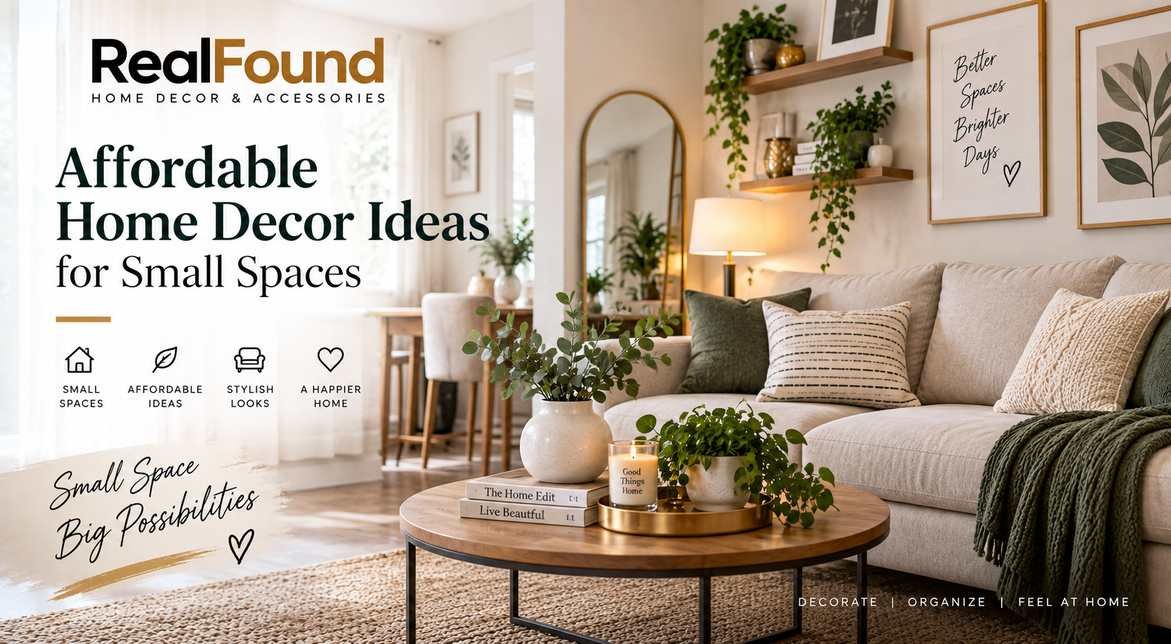
Decorating a small home can be challenging, especially when you want it to look stylish without spending a lot of money. Limited floor space does not mean you have to sacrifice comfort, personality, or beautiful design.
With thoughtful choices, even a compact apartment, bedroom, living room, or entryway can feel open and inviting. The key is to choose decor that works with the size of the room instead of filling every available corner.
Fortunately, creating an attractive interior does not require an expensive renovation. A few affordable home accessories, carefully selected colors, mirrors, wall decorations, and practical storage solutions can completely change the appearance of a small space.
Here are some affordable home decor ideas for small spaces that can help you create a home that feels larger, more organized, and more personal.
1. Start With a Light and Simple Color Scheme
Color can have a major impact on how a small room feels.
Light shades such as white, cream, beige, soft gray, and warm neutrals can make walls appear more open and allow natural light to move through the room.
You do not need to make everything the same color. Instead, create a simple base and add personality through small decorative accents.
For example, a neutral room can be enhanced with:
- Green cushions
- Wooden accessories
- Metallic accents
- Decorative artwork
- Indoor plants
- Textured fabrics
This approach keeps the room visually calm while still giving it character.
2. Use Mirrors to Create the Illusion of More Space
One of the easiest small space decor ideas is adding a strategically placed mirror.
A mirror can reflect light and create the visual impression of additional space. It can be especially effective in small living rooms, bedrooms, hallways, and entryways.
Instead of covering a small wall with several decorations, consider using one attractive decorative mirror as the focal point.
Where Should You Place a Mirror?
Try positioning a mirror:
- Opposite a window
- Above a console table
- Behind a small sofa
- Near an entryway
- On a bedroom wall
Choose a size that fits the wall. A larger mirror can sometimes make a stronger impact than several tiny decorative pieces.
3. Decorate Walls Instead of Floors
When floor space is limited, look upward.
Walls provide valuable decorating opportunities without taking away walking space. Floating shelves, artwork, mirrors, and wall-mounted decorations can add style while keeping the floor relatively clear.
For a small apartment, consider using:
- Floating shelves
- Decorative mirrors
- Framed artwork
- Small wall sculptures
- Vertical storage
- Wall-mounted organizers
A well-designed wall can become an attractive feature without making the room feel crowded.
4. Choose Decorative Accessories Carefully
Small rooms can quickly look cluttered when too many accessories are used.
Rather than purchasing several unrelated items, select a few pieces that complement your existing furniture.
Affordable home accessories such as decorative trays, small vases, bowls, mirrors, and tabletop accents can add personality without requiring a major investment.
A useful rule is to give every decorative item a purpose. It should either improve the appearance of the space, provide a practical function, or ideally do both.
5. Style a Small Coffee Table
A coffee table does not need a large collection of decorations.
A simple arrangement can make a small living room feel more polished. Start with a decorative tray and add one or two complementary objects.
For example, you could combine:
- A decorative tray
- A small vase
- A plant
- A candle
- A decorative bowl
Leave some of the table surface visible. Empty space is important when decorating compact rooms because it prevents the arrangement from appearing overwhelming.
6. Use Vertical Space
One of the most overlooked solutions for small homes is vertical space.
If your floor area is limited, use the walls to increase storage and display opportunities.
Tall shelving units, vertical artwork, wall-mounted shelves, and strategically placed mirrors can draw the eye upward and make a room feel taller.
Vertical decorating can be particularly useful in:
- Small apartments
- Studio homes
- Narrow bedrooms
- Compact offices
- Small entryways
The idea is simple: make the walls work harder so the floor does not have to.
7. Keep Furniture Proportional to the Room
Beautiful furniture can still make a small room uncomfortable if it is too large.
Before buying furniture, measure the available space. Leave enough room for people to walk around comfortably.
A smaller sofa, compact coffee table, narrow console, or lightweight accent chair may work better than oversized furniture.
The same principle applies to decorative accessories. Large accessories can become focal points, but too many oversized pieces can make a compact room feel smaller.
8. Create a Simple Entryway
A small entryway does not need much decoration.
A narrow console table combined with a mirror can provide both style and functionality. You can place a small decorative tray on the table for keys and other everyday items.
Add one or two simple accessories, such as a vase or small decorative object.
The result can be attractive without using much space.
Small Entryway Decor Formula
Try this combination:
Mirror + narrow table + decorative tray + small accent
This simple setup can create an organized first impression while keeping the entrance practical.
9. Add Plants for Natural Color
Plants are an affordable way to introduce color and texture into a small room.
You do not need a large collection. One medium-sized plant or a few small plants can make the space feel fresher.
For rooms with suitable natural light, real plants can bring an organic element into the interior. If maintaining plants is difficult, artificial greenery can provide a similar decorative effect.
Place smaller plants on:
- Shelves
- Side tables
- Desks
- Console tables
- Window areas
Avoid blocking walkways with large planters.
10. Use Decorative Trays to Control Clutter
A decorative tray can be surprisingly useful in a small home.
Instead of allowing small objects to spread across a table or countertop, use a tray to group them together.
A tray can hold:
- Keys
- Candles
- Small plants
- Perfume bottles
- Decorative objects
- Coffee table accessories
Grouping objects makes the arrangement look intentional and makes it easier to move everything when cleaning.
11. Make Your Bedroom Feel Bigger
A small bedroom should feel peaceful rather than crowded.
Start by keeping the color palette simple and avoiding unnecessary furniture. Use wall space for decoration and storage whenever possible.
A decorative mirror can add depth, while a few carefully selected accessories can give the room personality.
For a comfortable small bedroom, consider:
- Neutral bedding
- A decorative wall mirror
- Simple bedside accessories
- Soft lighting
- Minimal wall art
- Light-colored curtains
- Small storage solutions
Keep the bedside area organized so that the room maintains a clean appearance.
12. Choose Multi-Purpose Decor
When space is limited, items that perform more than one function can be especially valuable.
Look for decorative pieces that can also help organize everyday objects.
For example, a decorative tray can become an organizer, while a stylish basket can provide storage. A mirror can serve as both wall decoration and a practical item.
This approach allows you to enjoy attractive interiors without filling your home with unnecessary objects.
13. Create One Strong Focal Point
A small room does not need multiple competing focal points.
Instead, choose one area that should attract attention.
This could be:
- A decorative mirror
- A feature wall
- A piece of artwork
- A stylish sofa
- A beautiful console table
- A carefully decorated shelf
Once you have selected the focal point, keep the surrounding decor relatively simple.
This creates visual hierarchy and helps the room feel more organized.
14. Use Texture Instead of Too Many Colors
If you want a sophisticated interior, you do not necessarily need bright colors.
Texture can create visual interest while maintaining a calm color palette.
Combine materials such as:
- Wood
- Ceramic
- Glass
- Metal
- Cotton
- Woven materials
- Soft textiles
For example, a beige room can look much more interesting when you combine wooden accessories with woven textures, ceramic decorations, and soft cushions.
15. Refresh Your Decor Seasonally
You do not have to redesign your entire home every few months.
Instead, replace a few small accessories according to the season.
During spring and summer, lighter colors and natural textures can create a fresh appearance. During fall and winter, warmer tones and textured accessories can make the room feel cozy.
Small changes can include:
- Cushion covers
- Decorative trays
- Vases
- Tabletop accessories
- Throws
- Small artwork
This allows you to keep your interior fresh without spending a large amount of money.
16. Avoid Overdecorating
One of the most important rules for small spaces is knowing when to stop.
Adding more decorations does not necessarily make a room look better. In fact, too many accessories can make a compact space feel smaller.
After decorating an area, step back and look at it as a whole.
If an object does not add beauty, function, or meaning, consider removing it.
A clean and carefully edited interior often looks more expensive than a room filled with inexpensive decorations.
17. Shop for Decor With a Plan
Before purchasing new home decor, make a list of what your space actually needs.
Consider:
- What colors are already in the room?
- Which areas look empty?
- What storage problems do you have?
- What size accessories can the room handle?
- Which items will provide the biggest visual improvement?
Planning your purchases helps prevent unnecessary spending and makes it easier to create a cohesive interior.
18. Build Your Style Gradually
You do not need to decorate your entire home in one weekend.
Start with one room or even one small area.
Improve it gradually by adding pieces that work with what you already own. Over time, your home can develop a consistent style without requiring a large upfront budget.
This is especially useful for renters and people living in smaller apartments because it allows flexibility.
Final Thoughts
Creating a beautiful small home is more about smart decisions than expensive purchases.
Light colors can make rooms feel open, mirrors can add visual depth, wall decor can save floor space, and carefully selected home accessories can bring personality without creating clutter.
The most effective affordable home decor ideas for small spaces focus on balance. Choose pieces that fit the room, use vertical areas when possible, keep surfaces organized, and allow enough empty space for the interior to breathe.
Whether you live in a studio apartment, a compact house, or simply have one small room that needs attention, thoughtful decorating can make the space feel more comfortable and stylish.
With the right approach, small space does not have to mean small style.