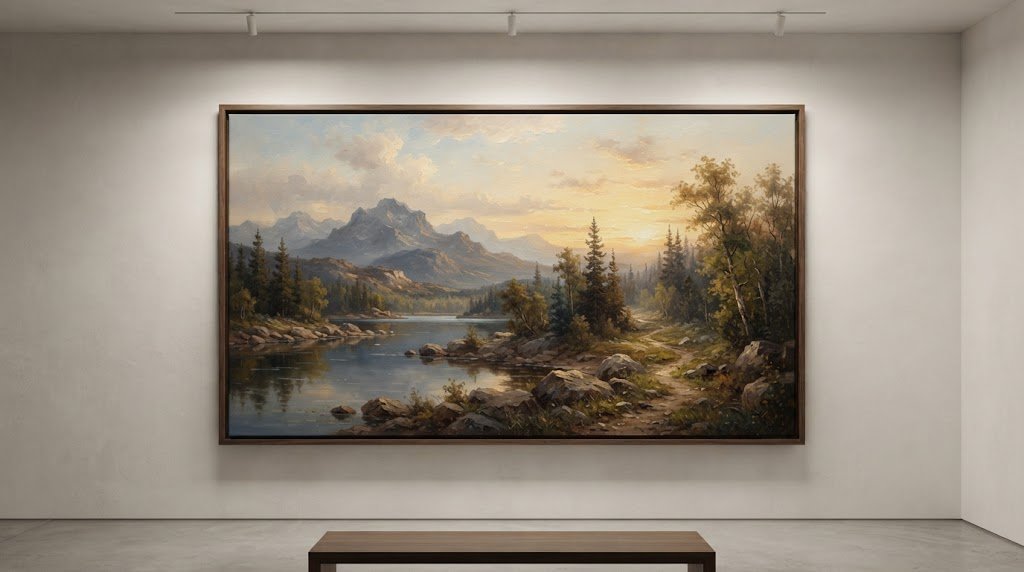
A beautiful landscape can capture much more than a location. The colors of a sunset, the movement of water, distant mountains, open fields, or a quiet forest can create an emotional response even when viewed through a painting. That is why landscape wall art remains a popular choice for people who appreciate nature-inspired artwork.
Landscape paintings can range from highly realistic scenes to loose, contemporary interpretations. Some focus on dramatic skies and powerful scenery, while others use simple shapes and muted colors to create a peaceful visual experience.
With so many styles available, choosing the right landscape artwork is less about following one rule and more about understanding what type of scenery, color, and artistic approach connects with you.
What Is Landscape Wall Art?
Landscape wall art is artwork inspired by outdoor environments and natural scenery. A painting may represent a real location, an imagined landscape, or an artistic interpretation of nature.
Common subjects include:
- Mountains and valleys
- Beaches and oceans
- Forests and woodland
- Lakes and rivers
- Deserts and open fields
- Waterfalls
- Sunsets and sunrises
- Countryside scenes
- City landscapes
The level of realism can vary considerably. A traditional landscape painting may carefully reproduce natural details, while modern landscape art may simplify the scene through color, shapes, and expressive brushwork.
Why Landscape Paintings Remain Popular
Nature provides an almost endless source of artistic inspiration.
A landscape can communicate calmness, energy, mystery, nostalgia, or adventure depending on how the artist approaches it. A bright coastal scene can feel completely different from a misty mountain painting, even though both are based on nature.
Another advantage is variety. Landscape artwork can fit many artistic preferences, from traditional oil-painting aesthetics to contemporary canvas designs.
Choose a Landscape That Matches Your Taste
Start with the scenery you naturally find interesting.
Do you prefer:
- Snow-covered mountains?
- Calm lakes?
- Ocean waves?
- Forest paths?
- Golden fields?
- Dramatic skies?
- Desert landscapes?
- Waterfalls?
- Coastal sunsets?
Your personal connection to the subject is important. A painting can remain interesting for years when its subject genuinely appeals to you.
Realistic vs. Modern Landscape Art
Landscape artwork is not limited to photorealistic painting.
Realistic Landscape Paintings
Realistic landscapes attempt to represent scenery with recognizable details, natural proportions, and carefully observed colors.
These paintings can be particularly appealing if you enjoy traditional artistic techniques and detailed scenery.
Impressionistic Landscape Artwork
Impressionistic approaches often focus on light, atmosphere, and color rather than reproducing every detail.
Brushstrokes may remain visible, allowing the viewer to experience the overall feeling of the scene rather than examining every individual object.
Contemporary Landscape Art
Modern landscape paintings may simplify natural scenery into shapes, color blocks, expressive marks, or unusual perspectives.
The subject may still be recognizable, but the artistic treatment gives it a more contemporary character.
Consider the Mood of the Painting
Two landscape paintings can depict similar scenery while creating completely different moods.
A sunset with warm orange and gold tones can feel energetic and dramatic. A misty forest using gray-green shades may create a quieter atmosphere.
Before selecting a painting, consider the emotional quality you want the artwork to communicate.
Ask yourself:
- Does the artwork feel peaceful?
- Is it energetic or dramatic?
- Does it create a sense of openness?
- Are the colors calming or intense?
- Does the scene remind you of somewhere meaningful?
These questions can help narrow down your choices.
Pay Attention to Color
Color is one of the most important elements in landscape artwork.
Natural scenery can be represented using realistic colors, or an artist can deliberately exaggerate them for artistic effect.
For example, a landscape may use deep blues for water, warm golds for sunlight, rich greens for vegetation, or dramatic dark tones for mountains and clouds.
When comparing paintings, look at the dominant palette as well as smaller accent colors.
Choose the Right Artwork Size
The size of a landscape painting affects how much detail you can appreciate.
A small artwork can work well when the composition is relatively simple. Detailed scenic paintings may benefit from a larger format because additional space allows more elements to remain visible.
Before purchasing, measure the intended display area.
Consider:
- Wall width
- Wall height
- Nearby furniture
- Viewing distance
- Artwork orientation
- Other paintings nearby
A horizontal landscape often works naturally with wide wall areas, while a vertical nature painting can emphasize mountains, trees, waterfalls, or tall architectural features.
Horizontal Landscape Paintings
Many landscape scenes naturally suit a horizontal format because the composition can extend from one side to another.
A wide canvas can provide enough space for elements such as:
- Mountain ranges
- Ocean horizons
- Open fields
- Forest panoramas
- Sunset skies
- River valleys
However, the orientation should always support the actual composition of the artwork rather than being selected simply because it is a landscape.
Nature-Inspired Artwork Beyond Traditional Scenery
Landscape art does not always have to show a complete panoramic scene.
Nature-inspired artwork can focus on one particular element, such as a tree, branch, waterfall, mountain peak, or section of coastline.
These compositions can offer a more focused interpretation of nature while still providing the visual character associated with landscape painting.
Look at the Details Before Buying Online
When shopping for landscape artwork online, the main product image is only one part of the information you need.
Check the artwork dimensions carefully and look for additional photographs showing details of the painting or print.
It is useful to review:
- Artwork dimensions
- Canvas or print material
- Frame information
- Orientation
- Surface texture
- Color representation
- Available sizes
- Hanging requirements
Remember that colors can appear slightly different depending on the screen used to view the product.
Build a Collection Around a Theme
If you enjoy nature paintings, you can gradually build a collection around a particular theme.
For example, you might collect artwork featuring:
- Coastal scenery
- Mountain landscapes
- Forest environments
- Seasonal changes
- Desert landscapes
- Water scenes
A themed collection can create a stronger artistic identity than choosing completely unrelated pieces.
You can also combine landscape paintings with other styles. A realistic landscape can sit alongside abstract or minimalist artwork when there is a visual connection through color, framing, or composition.
Explore Landscape and Other Wall Art Styles
If you are interested in different types of painting, exploring multiple styles can help you understand your own preferences.
For example, RealFound also offers inspiration beyond nature-based artwork. You can explore the RealFound collection and compare different artistic directions.
If abstract compositions interest you, our abstract wall art guide explores color, composition, texture, and contemporary artistic styles.
Choose Artwork That Has Lasting Appeal
Trends can change quickly, but a painting that personally connects with you can remain relevant for much longer.
Instead of choosing landscape artwork only because a particular style is popular, consider whether you would still enjoy looking at the piece after several years.
A meaningful location, memorable color palette, distinctive artistic technique, or simply a beautiful scene can give a painting lasting appeal.
Final Thoughts
Choosing landscape wall art starts with finding a scene and artistic style that genuinely interests you.
Think about the type of scenery you enjoy, then consider the painting’s mood, color palette, size, orientation, and level of detail. If you are buying online, always check the product specifications and actual measurements before making a decision.
Whether you prefer realistic mountains, peaceful coastal scenes, expressive forests, dramatic skies, or contemporary interpretations of nature, landscape artwork offers an enormous range of possibilities.
The best piece is not necessarily the most complicated or dramatic one. It is the artwork that continues to hold your attention and gives you something to discover each time you look at it.