

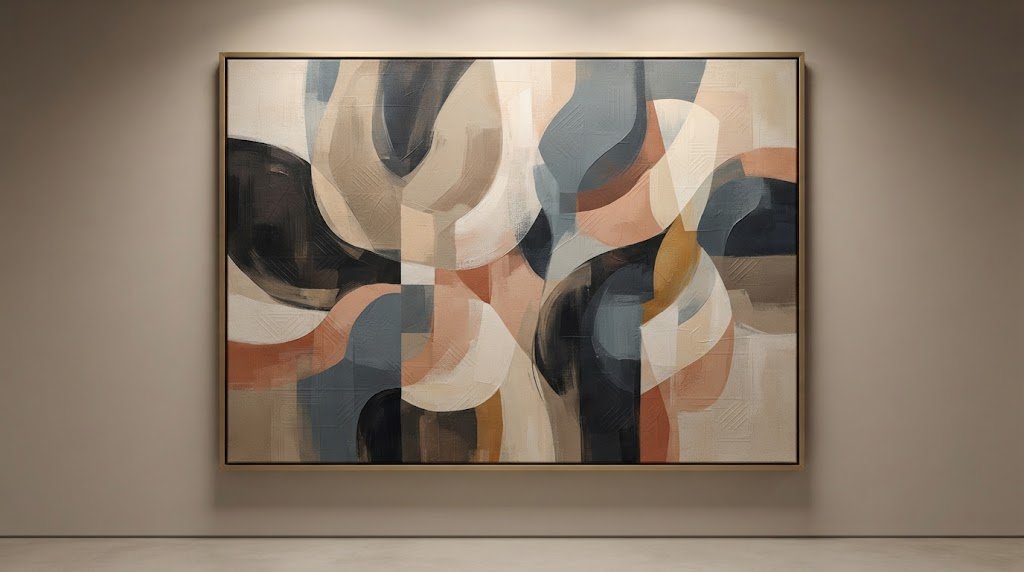
Abstract wall art gives a painting the freedom to communicate through color, shape, texture, movement, and composition rather than simply reproducing a recognizable subject. That freedom is one of the reasons abstract artwork can feel different to every viewer.
A particular painting might remind one person of a landscape, while someone else may simply appreciate its colors and brushwork. There is no single interpretation that has to be correct. The artwork can become meaningful through the way you experience it.
From subtle minimalist compositions to energetic, colorful paintings, abstract art offers an enormous range of visual possibilities. Understanding those differences can make it easier to find artwork that genuinely suits your taste.
What Is Abstract Wall Art?
Abstract wall art moves away from realistic representation and focuses on visual elements such as:
- Lines and geometric forms
- Color relationships
- Brushstrokes
- Texture and layering
- Patterns
- Negative space
- Light and contrast
- Organic or irregular shapes
Some abstract paintings are carefully structured, while others are created through expressive and spontaneous techniques. Because the category is so broad, two abstract artworks can look completely different while still sharing the same fundamental approach.
Popular Abstract Art Styles
Knowing the major styles can help narrow down your choices.
Minimalist Abstract Art
Minimalist abstract paintings usually use restrained colors, simple forms, and plenty of open space. Instead of overwhelming the viewer with detail, these pieces rely on subtle composition and carefully selected visual elements.
Neutral tones, simple lines, and understated shapes are common in this style.
Geometric Abstract Art
Geometric abstract artwork uses structured forms such as circles, squares, rectangles, angles, and intersecting lines.
The organized nature of these compositions can create a strong contemporary appearance. If you enjoy precision and clean visual patterns, geometric art may be particularly appealing.
Expressive Abstract Paintings
Expressive abstract paintings often emphasize movement, emotion, and visible artistic technique.
Bold brushstrokes, overlapping colors, irregular forms, and energetic compositions can give these artworks a dynamic character. They can also work particularly well when you want the painting itself to become the main visual feature.
Color-Focused Abstract Art
Some paintings are built primarily around their color palette.
An artist might combine warm shades such as red, orange, and yellow, or create a cooler composition using blue, green, and violet. Other works may use mostly neutral colors with small areas of contrast.
Because color strongly affects the way we perceive artwork, the palette can be one of the first things to consider when choosing an abstract piece.
How to Choose Abstract Wall Art
Start with your personal response to the artwork.
Instead of asking whether a painting is currently fashionable, ask yourself what actually attracts you to it. You might like its unusual shapes, calming colors, dramatic contrast, or visible texture.
After identifying the visual qualities you prefer, consider practical details such as size, orientation, placement, and surrounding colors.
Consider the Artwork’s Size
Scale can dramatically change the presence of a painting.
A small abstract piece can work as part of a larger collection, while an oversized painting can act as a strong focal point by itself.
Before ordering artwork, measure the area where you intend to display it. Consider the wall width, nearby furniture, ceiling height, and viewing distance.
Useful options include:
- One large statement painting
- Two coordinated artworks
- A set of smaller pieces
- A mixed gallery arrangement
The goal is to choose a size that feels proportional rather than forcing too many pieces into one area.
Choose Colors That Work Together
Your artwork does not need to perfectly match the colors already around it.
Instead, look for visual relationships. An abstract painting might repeat a subtle color already present in furniture or accessories, or it could introduce a contrasting shade that adds energy.
For a calm appearance, neutral abstract artwork can work with a wide range of surroundings. If you want more visual impact, stronger colors can turn the painting into an immediate focal point.
Look Closely at the Composition
Composition describes how the different elements are arranged inside an artwork.
A painting might have a dominant central shape, diagonal movement, repeated forms, layered colors, or large areas of empty space.
Try viewing a piece from both near and far. At a distance, you may notice the overall balance and color palette. Up close, brushwork, texture, and smaller details may become more visible.
This change in perception can be an important part of the appeal of abstract artwork.
Explore Textured Abstract Artwork
Texture can add another level of interest to a painting.
Some artworks feature visible brush marks, layered surfaces, raised details, or mixed-media elements. These characteristics can interact with lighting and create subtle changes in appearance throughout the day.
If you enjoy artwork with a dimensional or handcrafted appearance, pay attention to close-up product photographs when shopping online.
When to Choose Large Abstract Wall Art
A large abstract painting can give a wide wall a strong visual anchor without requiring several separate pieces.
Large artwork can be especially effective when the surrounding design is relatively simple. With fewer competing elements, the painting has enough space for its colors, forms, and composition to stand out.
Before purchasing a large piece, measure carefully. Think about both the physical dimensions and how much visual space the artwork will occupy.
Mixing Abstract Art With Other Styles
Abstract paintings can also be combined with other forms of artwork.
For example, a collection might include:
- Abstract paintings
- Black-and-white photography
- Botanical artwork
- Line drawings
- Landscapes
- Figurative paintings
- Decorative prints
A mixed collection looks more intentional when there is a connecting element. Similar frame finishes, complementary colors, consistent spacing, or a shared theme can help different artworks work together.
What to Check Before Buying Artwork Online
A screen cannot always communicate the exact size, texture, or appearance of a painting. Before purchasing, check the product information carefully.
Pay attention to:
- Exact dimensions
- Orientation
- Canvas or print material
- Frame information
- Available sizes
- Product photographs
- Close-up details
- Care or hanging instructions
Comparing the listed measurements with your available wall space can prevent surprises after delivery.
At RealFound, you can explore a growing selection of artwork and decor pieces while looking for designs that match your preferred visual style.
Visit the RealFound collection to explore available pieces and discover different directions for your art selection.
Why Abstract Art Can Feel Personal
One of the most distinctive qualities of abstract art is that it does not always provide an obvious answer about what you are supposed to see.
The same painting can produce different interpretations from different people. Colors might remind you of a particular place, while shapes or textures may create a completely different association.
That openness gives abstract artwork a personal quality. Your interpretation can also change over time as your surroundings, experiences, and preferences change.
Final Thoughts
Choosing abstract wall art is not simply about finding an attractive picture. It is about discovering an artwork whose colors, forms, texture, and composition connect with your personal taste.
Start by identifying the styles you enjoy, then consider size, color, placement, and the visual relationship between the artwork and its surroundings.
Whether you prefer minimalist compositions, geometric designs, expressive brushwork, or vibrant color combinations, there is a wide range of abstract artwork to explore.
The best starting point is simple: choose a piece that makes you want to keep looking at it.



[…] you enjoy abstract designs, you can also explore the RealFound abstract wall art article for additional ideas about colors, composition, texture, and artistic […]
[…] abstract compositions interest you, our abstract wall art guide explores color, composition, texture, and contemporary artistic […]