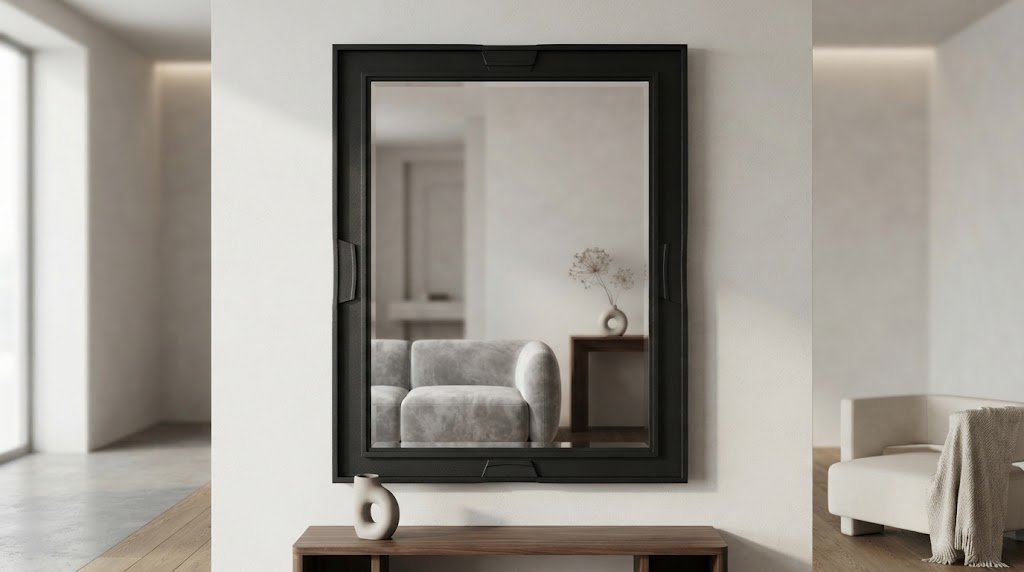
A mirror can be more than something you use to check your reflection. The right decorative wall mirrors can become an important design element, adding shape, light, depth, and visual interest to a room. From oversized statement mirrors to simple round designs, there are many styles to explore.
Choosing a mirror online, however, involves more than finding a design you like. Size, frame material, shape, mounting method, and placement can all affect how the finished piece looks.
For shoppers exploring wall decor, RealFound offers an opportunity to combine decorative pieces with artwork and other visual elements to create a more considered look.
What Are Decorative Wall Mirrors?
Decorative wall mirrors are mirrors designed to contribute to the overall appearance of a space as well as provide a reflective surface.
Unlike a basic functional mirror, a decorative mirror may feature:
- An unusual shape
- A distinctive frame
- Decorative edging
- A sculptural design
- Natural materials
- Geometric details
- An oversized format
The mirror itself becomes part of the visual composition rather than simply serving a practical purpose.
Why Use a Decorative Mirror?
Mirrors have several visual qualities that make them useful in interior styling.
A strategically placed mirror can reflect natural or artificial light and create the perception of additional depth. A large mirror can also occupy a substantial wall area without introducing the same visual density as a solid artwork.
Decorative mirrors can therefore serve different purposes depending on their size and design.
You might choose one to:
- Create a focal point
- Add visual depth
- Reflect light
- Fill a blank wall
- Complement existing artwork
- Introduce a new shape
- Add a decorative frame
Popular Decorative Wall Mirror Styles
Mirror designs vary considerably, so choosing a style that fits your existing visual direction is important.
Round Wall Mirrors
Round mirrors introduce curved lines into an environment dominated by rectangular furniture, doors, windows, or artwork.
The circular shape can soften a composition and create a natural focal point.
A simple round mirror with a thin frame can provide a minimalist appearance, while a thicker or more decorative frame can make the mirror more prominent.
Large Decorative Mirrors
Large mirrors can occupy a significant amount of wall space and become a statement feature.
Before choosing an oversized mirror, measure the available wall carefully. Consider the complete dimensions, including the frame.
A mirror that looks appropriately sized in a product photograph may feel very different when installed on your actual wall.
Geometric Wall Mirrors
Geometric mirrors use shapes such as arches, hexagons, rectangles, ovals, or combinations of multiple forms.
These designs can introduce a contemporary architectural quality.
Geometric mirrors can be particularly effective when you want wall decor that feels modern without relying on artwork alone.
Statement Mirrors
A statement mirror is designed to attract attention through its size, shape, frame, or unusual construction.
The mirror may feature a bold silhouette or an elaborate frame that makes it visually important even before considering its reflective surface.
Because statement mirrors naturally attract attention, the surrounding wall should not necessarily be overloaded with competing decorative elements.
How to Choose the Right Mirror Shape
The shape of a mirror can change the visual balance of a wall.
Round
Best suited to compositions where you want to introduce softer curves.
Rectangular
A classic option that works naturally with many architectural and furniture shapes.
Arched
An arched mirror can introduce a more distinctive silhouette while maintaining a relatively simple form.
Oval
An oval shape combines the softness of a round mirror with a taller or wider proportion.
Irregular
Organic or asymmetrical mirrors can create a more artistic and contemporary appearance.
The right choice depends on the surrounding lines and the amount of visual contrast you want.
Choosing the Correct Size
Size is one of the most important factors when buying wall mirrors.
Start by measuring the wall area where the mirror will be installed.
Then consider the objects around it. A mirror positioned above furniture should usually have a deliberate relationship with the width of that furniture rather than appearing randomly sized.
For a large empty wall, an oversized mirror may provide stronger visual balance than several tiny mirrors.
For narrow wall sections, a vertical design may use the available space more efficiently.
Consider the Frame Material
The frame can change the entire character of a decorative mirror.
Wood Frames
Wood can add warmth and natural visual texture.
Depending on the finish, it can range from light and contemporary to darker and more traditional.
Metal Frames
Metal frames often provide a cleaner, more structured appearance.
Black metal can create strong contrast, while brass or other metallic finishes can introduce a more decorative quality.
Frameless Mirrors
A frameless mirror keeps attention primarily on the reflective surface and silhouette.
This can be useful when you want the mirror to feel visually light.
How to Position Decorative Wall Mirrors
Placement matters just as much as the mirror itself.
Before installation, consider what the mirror will reflect.
A mirror facing an attractive artwork, window, architectural feature, or visually interesting part of a room can create a more appealing reflection.
Avoid positioning it where the reflection simply emphasizes clutter or an uninteresting surface.
Think of the mirror as a visual window into another part of the environment.
Use Mirrors to Reflect Light
One of the practical advantages of mirrors is their ability to reflect light.
A mirror positioned near a window can reflect daylight and make the surrounding area feel more visually open.
Artificial lighting can also create interesting reflections.
However, the goal should not simply be to maximize reflection. Consider the quality of what is being reflected and how the light changes throughout the day.
Decorative Mirrors and Wall Art
A mirror does not have to replace artwork.
It can work alongside paintings, prints, and other decorative pieces.
For example, a large mirror can be combined with smaller artworks to create visual variety. Alternatively, a mirror can occupy one wall while a painting becomes the focal point on another.
The key is to create relationships through scale, shape, color, or framing.
If every piece competes for attention, the overall arrangement may feel crowded.
Creating a Gallery-Style Wall With Mirrors
Mirrors can also become part of a multi-piece wall arrangement.
Instead of using identical artwork throughout the arrangement, combine different visual elements while maintaining some consistency.
You could repeat:
- Similar frame colors
- Related shapes
- A consistent material
- A shared color palette
- Similar proportions
A round mirror can provide contrast when placed among rectangular artwork because the difference in shape adds visual variety.
Decorative Wall Mirrors for Different Design Styles
The mirror style should complement the broader visual direction.
Modern
Look for clean lines, slim frames, simple silhouettes, and restrained finishes.
Minimalist
Choose uncomplicated shapes and avoid excessive decorative details.
Contemporary
Geometric forms, unusual silhouettes, and mixed materials can work well.
Organic
Natural wood, curved shapes, and softer forms can support an organic visual direction.
Traditional
More detailed frames and classic shapes can create a formal appearance.
There is no requirement to follow one style throughout an entire space. Mixing styles can also create an individual look when the pieces share a common visual connection.
What to Check Before Buying a Mirror Online
Buying a mirror online requires more attention to specifications than buying a small decorative accessory.
Before ordering, check:
- Overall dimensions
- Mirror dimensions
- Frame dimensions
- Frame material
- Glass specifications
- Weight
- Mounting hardware
- Installation requirements
- Packaging details
- Shipping information
- Return policy
Weight is particularly important for larger mirrors because the wall and mounting hardware need to support the finished piece safely.
How to Measure Before Ordering
Do not rely on photographs alone.
Use a measuring tape to record the available width and height.
For an oversized mirror, you can use painter’s tape to outline the approximate outer dimensions directly on the wall. Step back and evaluate the proportions from different viewing distances.
This simple test can reveal whether the mirror is likely to feel balanced or oversized.
Choosing Between One Large Mirror and Several Small Mirrors
One large mirror provides a strong visual statement and a relatively simple installation.
Several smaller mirrors offer more flexibility and can create a collection-like appearance.
Your decision should depend on the wall dimensions and the visual effect you want.
A wide wall may support a substantial mirror, while a collection of smaller pieces can work when you want more variation.
Combining Mirrors With Other Decor
A mirror can be paired with paintings, sculptures, shelves, plants, or other decorative objects.
The important consideration is balance.
If the mirror has a highly detailed frame, simpler surrounding pieces may allow it to remain prominent.
If the mirror has an extremely minimal design, artwork or textured objects nearby can provide additional visual interest.
RealFound can be used as a starting point for exploring artwork and decorative pieces that can work alongside statement wall elements.
Final Thoughts
Decorative wall mirrors combine practical function with visual design. Their shape, size, frame, and placement can influence how an entire wall is perceived.
Before purchasing, measure the available area, consider the mirror’s outer dimensions, examine the frame material, and think carefully about what the mirror will reflect.
Whether you prefer a round minimalist mirror, an oversized statement piece, a geometric design, or a framed contemporary style, choose a mirror that works with the visual character you want to create.
A successful decorative mirror does not simply cover an empty wall. It becomes part of the composition, reflecting light, creating depth, and adding another layer of visual interest.