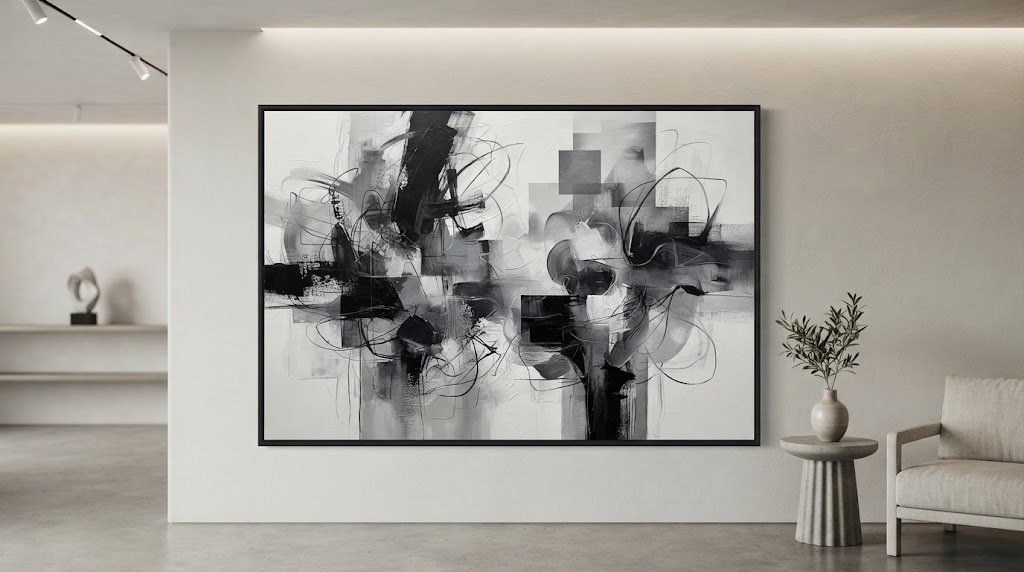
Color is not always necessary to make artwork visually powerful. Black and white wall art uses contrast, shape, texture, lines, and composition to create a distinctive artistic effect without relying on a broad color palette.
From expressive monochrome paintings to minimalist compositions and dramatic abstract artwork, black-and-white art can take many forms. Some pieces are quiet and understated, while others use strong contrast to immediately attract attention.
For anyone searching for monochrome artwork, the key is to look beyond the simple combination of two colors. The balance between black, white, gray, texture, and empty space can completely change how a painting feels.
At RealFound, artwork is selected with visual character in mind, giving art enthusiasts different styles to explore when looking for something distinctive.
What Is Black and White Wall Art?
Black and white wall art refers to artwork primarily created using black, white, and often different shades of gray.
The style can include:
- Abstract paintings
- Minimalist artwork
- Line art
- Photography-inspired artwork
- Geometric compositions
- Botanical designs
- Figurative artwork
- Contemporary paintings
Some pieces use almost equal amounts of black and white, while others are predominantly one color with the second used for contrast.
Gray can also play an important role by creating smoother transitions between the two extremes.
Why Is Monochrome Artwork So Popular?
Black and white artwork has an enduring visual quality because it depends heavily on contrast rather than changing color trends.
A monochrome painting can draw attention through its:
- Strong light-and-dark contrast
- Simple color palette
- Expressive brushwork
- Geometric shapes
- Fine lines
- Surface texture
- Negative space
Because the palette is limited, details in composition can become more noticeable.
A viewer may focus on the movement of a brushstroke, the shape of an object, or the relationship between empty and filled areas.
Popular Black and White Wall Art Styles
Monochrome artwork is much broader than simple black-and-white prints.
Black and White Abstract Art
Abstract artwork can use dramatic contrasts, irregular forms, expressive strokes, and layered textures.
A black-and-white abstract painting may look completely different depending on how much black is used, how the shapes are distributed, and whether gray tones are included.
Some compositions are energetic and bold, while others are restrained and minimalist.
Minimalist Black and White Art
Minimalist artwork often relies on simplicity.
A small number of shapes, lines, or carefully positioned forms can create a strong composition without requiring elaborate detail.
This type of artwork is particularly useful when you want the visual impact to come from proportion and negative space.
Monochrome Geometric Art
Geometric artwork uses circles, squares, rectangles, angles, grids, and other structured forms.
Black and white provide a natural palette for geometric compositions because the contrast can make individual shapes easy to distinguish.
The result can feel contemporary, architectural, and highly organized.
Black and White Botanical Art
Leaves, branches, flowers, and other natural forms can also be represented in monochrome.
Removing bright colors shifts attention toward shape, silhouette, texture, and detail.
This creates a more artistic interpretation of botanical subjects rather than simply reproducing their natural appearance.
Black and White vs. Monochrome
Although these terms are often used interchangeably, there is a small distinction.
Black and white artwork primarily focuses on those two colors, sometimes with gray.
Monochrome artwork can technically use different shades or tones of one color rather than strictly black and white.
For example, an artwork using charcoal, gray, and white may still be described as monochromatic even when pure black is not dominant.
Understanding this difference can help when searching online for artwork with a specific visual character.
How to Choose the Right Balance of Black and White
Not every black-and-white painting has the same visual intensity.
An artwork with a large amount of black can feel dramatic and visually heavy. A composition dominated by white may appear lighter and more open.
Before choosing a piece, consider the overall balance.
Look at:
- Amount of dark space
- Amount of light space
- Gray tones
- Shape distribution
- Negative space
- Texture
- Contrast level
If you want something visually bold, stronger black areas and sharper contrast may be suitable.
For a softer appearance, look for artwork that incorporates gray, off-white, subtle transitions, or lighter compositions.
Consider Texture
Texture can make monochrome artwork much more interesting.
When color is limited, surface detail becomes more noticeable.
Visible brushstrokes, raised paint, palette-knife marks, layered surfaces, and subtle canvas texture can create depth without introducing additional colors.
This is one reason textured black and white paintings can have a particularly strong visual presence.
If you are shopping online, look for close-up product photographs that show the surface rather than relying only on a distant image.
Choosing the Right Size
The size of monochrome artwork affects how strongly the contrast is perceived.
A small black-and-white painting can work as part of a collection or as a secondary artistic element.
A large monochrome painting, on the other hand, can become the primary focal point because its contrast occupies more visual space.
Before buying, measure the wall and compare it with the artwork’s actual dimensions.
If the product is framed, check whether the listed measurements refer to the artwork itself or the complete outer dimensions.
Should You Choose Framed or Unframed Artwork?
Both options can work with black-and-white paintings.
A slim black frame can reinforce the monochrome character and create a defined border.
A natural wood frame can introduce warmth and prevent the presentation from feeling too severe.
An unframed canvas can create a more relaxed contemporary appearance, especially when the artwork extends toward the edges.
The best choice depends on the artwork’s composition and the presentation you prefer.
How to Use Black and White Artwork as a Focal Point
A monochrome painting does not need bright color to attract attention.
Strong contrast can provide enough visual impact on its own.
If you want the artwork to become the main focal point, give it sufficient surrounding space. Avoid placing too many competing patterns immediately around it.
Lighting can also reveal details that may not be obvious in a standard photograph.
Directional lighting can emphasize texture and create subtle shadows across raised brushwork.
Black and White Art for Different Artistic Preferences
One advantage of monochrome artwork is its variety.
You can choose something:
- Dramatic and expressive
- Minimal and understated
- Geometric and structured
- Organic and botanical
- Textured and tactile
- Soft and atmospheric
- Bold and contemporary
This makes black and white artwork suitable for many different artistic tastes.
The important thing is to choose a composition you genuinely enjoy rather than assuming every monochrome painting creates the same effect.
Buying Black and White Artwork Online
Online images can sometimes make black appear darker or white appear brighter than the physical artwork.
When shopping online, check the product information carefully.
Pay attention to:
- Artwork dimensions
- Material
- Canvas or paper type
- Frame specifications
- Texture information
- Finish
- Mounting details
- Product photography
- Shipping information
- Return policy
If the artwork includes subtle gray or off-white tones, check the description to understand the actual palette.
At RealFound, product details can help you compare artwork based on its design and presentation before making a purchase.
How to Combine Multiple Monochrome Pieces
Several black-and-white artworks can be combined into one collection.
They do not necessarily need to be identical.
You can create visual consistency by repeating one or more elements, such as:
- Similar frame finishes
- Consistent black-and-white palettes
- Related artistic subjects
- Similar proportions
- Repeated geometric forms
- Comparable texture
A collection becomes more interesting when the individual pieces have some variation while still sharing a visual connection.
Final Thoughts
Black and white wall art proves that artwork does not need a wide range of colors to create visual impact. Contrast, texture, shape, proportion, and composition can provide plenty of artistic expression.
Whether you prefer minimalist line work, dramatic abstract painting, geometric compositions, or textured monochrome artwork, there are many directions to explore.
Before buying, consider the balance between black and white, the size of the artwork, its surface texture, framing, and the overall composition.
Most importantly, choose artwork that holds your attention. A successful monochrome piece is not simply black and white—it uses those elements thoughtfully to create a visual experience.