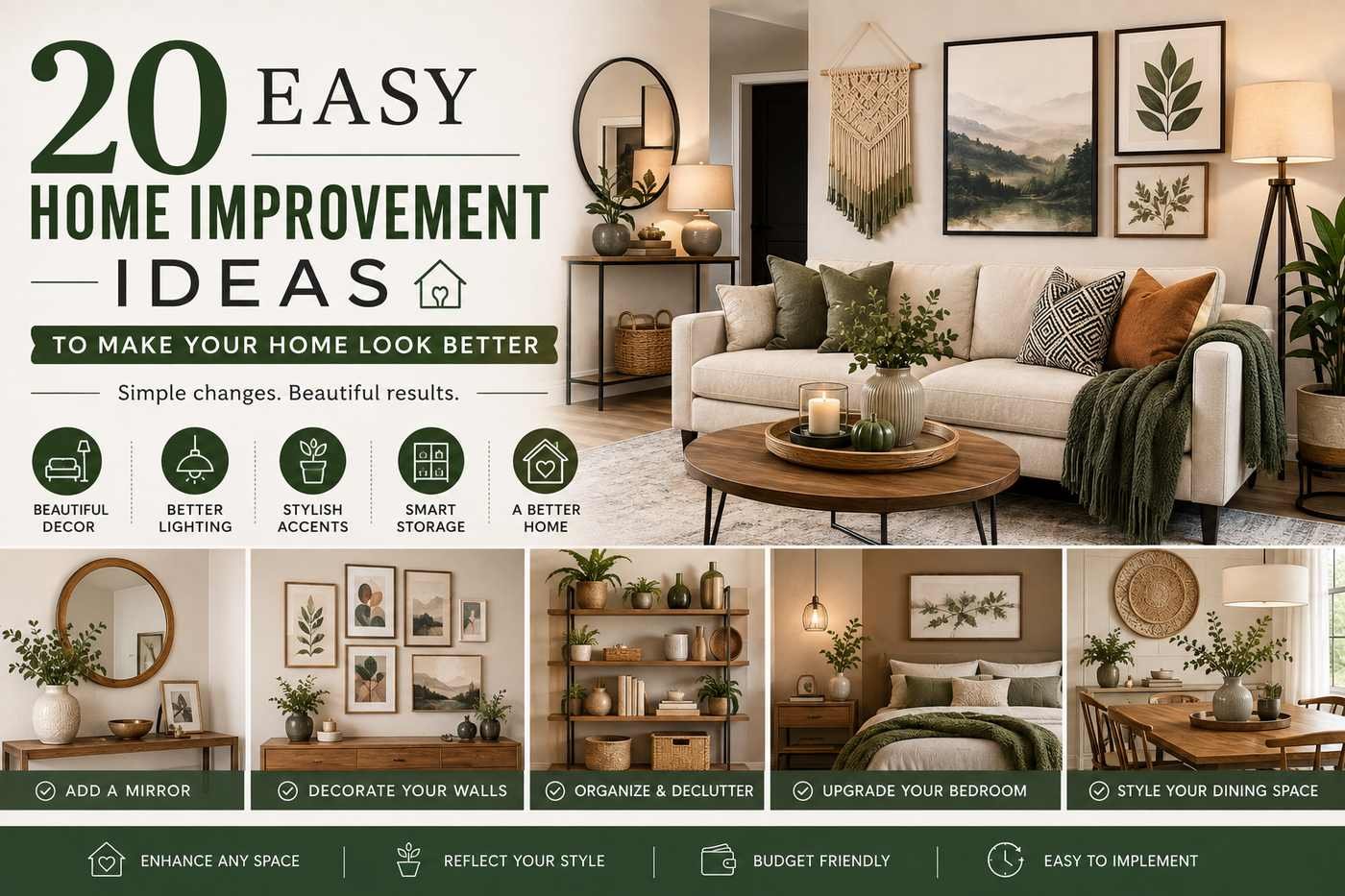
A beautiful home does not always require expensive furniture, major construction, or a complete renovation. Sometimes, a few carefully chosen changes can make a room feel newer, cleaner, and more comfortable.
Whether you live in an apartment, a small house, or a larger family home, simple improvements can have a noticeable effect. Changing a wall, improving storage, adding better lighting, or introducing a few decorative pieces can completely change the atmosphere of a space.
If you are looking for practical home improvement store ideas, here are 20 simple ways to give your home a fresh appearance without turning the process into a major project.
1. Refresh the Entryway
The entrance creates the first impression of your home.
You can make this area more welcoming with a small console table, decorative mirror, vase, or attractive storage basket. Keep the surface relatively clear so the entrance does not feel crowded.
A simple combination of useful storage and attractive accessories can make even a narrow entryway feel organized.
2. Give Your Walls a New Look
Walls occupy a large portion of any room, so changing them can have a strong visual effect.
You do not necessarily need to repaint the entire house. Instead, consider adding wall decor, framed artwork, a decorative wall hanging, or a carefully selected mirror.
Choose pieces that work with the existing furniture and colours rather than trying to make every wall completely different.
3. Create a Small Gallery Wall
If one large artwork does not suit your space, try several smaller pieces.
A gallery wall can include photographs, botanical prints, abstract artwork, or decorative illustrations. Arrange the pieces on the floor first so you can experiment with spacing before putting anything on the wall.
For a balanced result, repeat at least one colour or visual element throughout the arrangement.
4. Upgrade Your Lighting
Good lighting can change the mood of an entire room.
If your space currently depends on one bright ceiling light, introduce another source such as a table lamp, floor lamp, or decorative light.
Use brighter lighting where you work and softer illumination in areas where you relax.
Warm lighting can also make neutral interiors feel more comfortable during the evening.
5. Add a Decorative Mirror
Mirrors are useful for both decoration and everyday functionality.
A large mirror can become a focal point above a console, while a smaller design can work on a bedroom wall or hallway.
Look for a frame that complements your existing furniture. Gold, black, wood, and neutral finishes can each create a different impression.
6. Introduce Decorative Vases
A vase can be useful even when you do not have fresh flowers.
Textured ceramic vases, glass designs, and sculptural pieces can work as standalone home decor items.
Place one on a console, dining table, shelf, or side table. For a more layered arrangement, combine pieces of different heights.
Avoid filling every available surface. A little empty space helps decorative objects stand out.
7. Make Your Coffee Table More Interesting
A coffee table can become a small styling area.
Instead of placing random objects across the surface, group a few items together. A decorative tray can hold a candle, small vase, and another accent piece.
Books can add height, while a small plant can introduce a natural element.
The goal is to create an arrangement that looks intentional but remains practical for everyday use.
8. Improve Your Storage
Home improvement is not only about appearance.
Better organization can make your rooms feel noticeably better.
Use baskets, boxes, trays, and home organizers to manage smaller belongings. Items that previously remained scattered across tables or shelves can have a specific place.
Good organization also makes decorative areas easier to maintain.
9. Give Bedroom Decor More Personality
Your bedroom should feel comfortable rather than overly decorated.
Start with the bed because it is usually the largest feature in the room. Add cushions, a throw, or a simple decorative element to create more visual interest.
A bedside lamp, small vase, framed print, or decorative tray can complete the area without taking up much space.
Choose colours that help the room feel calm and coordinated.
10. Style Your Dining Area
Your dining area deserves attention beyond the dining table itself.
A simple centrepiece can make the space feel more finished. Try a decorative tray, vase, candle holder, or small arrangement of accessories.
You can also add wall art near the dining table to create a stronger connection between the furniture and surrounding walls.
Keep the centrepiece low enough that it does not interfere with conversation.
11. Add Greenery
Plants can introduce colour and natural character into an otherwise neutral room.
If maintaining real plants is difficult, decorative or artificial greenery can still provide a similar visual effect.
Place greenery near windows, on shelves, beside furniture, or inside decorative vases.
One larger plant can also fill an empty corner without requiring several small decorations.
12. Use Shelves as Display Areas
Wall shelves can combine storage with decoration.
Instead of filling every shelf completely, leave some open space between objects.
Try mixing:
- Small plants
- Books
- Vases
- Decorative objects
- Small framed artwork
- Storage boxes
Varying the height and shape of the objects can make the arrangement more visually interesting.
13. Choose One Statement Piece
Every room does not need dozens of accessories.
Sometimes one distinctive item can have a greater effect than many smaller pieces.
A decorative sculpture, unusual vase, large mirror, or bold artwork can become the main feature of a room.
Give the statement object enough surrounding space so that it can be noticed.
14. Refresh an Empty Corner
An unused corner can become a useful decorative area.
Depending on the available space, you could add a tall plant, floor lamp, narrow cabinet, chair, or decorative stand.
In a smaller room, avoid oversized furniture. A single vertical element can often fill the space without making the room feel cramped.
15. Create a More Comfortable Sitting Area
Small changes can make a seating area feel more inviting.
Add cushions with different textures, a soft throw, or a small side table. A nearby lamp can also make the area more functional during the evening.
Try to coordinate the accessories with the existing sofa rather than replacing everything.
16. Decorate Your Shelves Carefully
Shelves can quickly become cluttered.
Instead of placing an object in every available space, create small groups.
For example, place a vase beside two books and a small decorative object. On another section, use a plant and framed artwork.
Repeating similar colours throughout the shelf creates a more connected appearance.
17. Improve Small Spaces
Small rooms require careful selection of decorative items.
Choose accessories that provide visual interest without taking up too much physical space.
Wall-mounted pieces, mirrors, narrow shelves, and compact organizers can be particularly useful because they make use of vertical areas.
A lighter colour palette can also help a compact space feel more open.
18. Mix Modern and Traditional Elements
Your home does not need to follow one design style.
Modern furniture can work well alongside traditional-inspired patterns, textured pottery, wooden accessories, or locally influenced artwork.
The important thing is to find a visual connection.
Similar colours, materials, or shapes can help different styles work together naturally.
19. Change Small Details Seasonally
You do not need to redecorate your entire home every few months.
Instead, change smaller accessories.
For example, you can replace cushions, table accessories, decorative trays, candles, or small artwork to give a room a different feel.
This approach keeps your interior interesting without creating unnecessary expense.
20. Shop With a Plan
One of the most useful home improvement habits is deciding what your room actually needs before buying anything.
Before visiting a home improvement store or shopping online, consider:
What needs improvement?
Identify the area that currently feels incomplete.
What space is available?
Measure before purchasing larger products.
What colours already exist?
Choose accessories that complement your current palette.
What is the purpose?
Decide whether you need decoration, storage, lighting, or a combination.
Where will the product go?
Having a specific location in mind can prevent unnecessary purchases.
Make Small Changes That Feel Like You
Home improvement does not have to mean starting from zero.
Your existing furniture can often become the foundation for a better-looking space. A new wall hanging, decorative vase, organizer, lamp, mirror, or tray may be enough to change how a room feels.
The best interiors are not necessarily the ones with the most expensive products. They are the spaces where colours, textures, furniture, and accessories work comfortably together.
At Realfound, you can explore home decor items designed to bring both style and practicality into everyday spaces, including decorative vases, sculptures, organizers, decorative trays, dining space decor, wall decor, and home scents.
Start with one room. Identify what feels missing, make a few thoughtful changes, and build from there.
Final Thoughts
A home can feel completely different without undergoing a complete renovation.
Improve the lighting, organize clutter, refresh your walls, introduce greenery, style your shelves, and add a few carefully selected decorative pieces.
Whether your goal is a better bedroom, a more welcoming living room, or a cleaner dining area, small improvements can gradually create a home that feels more comfortable and personal.