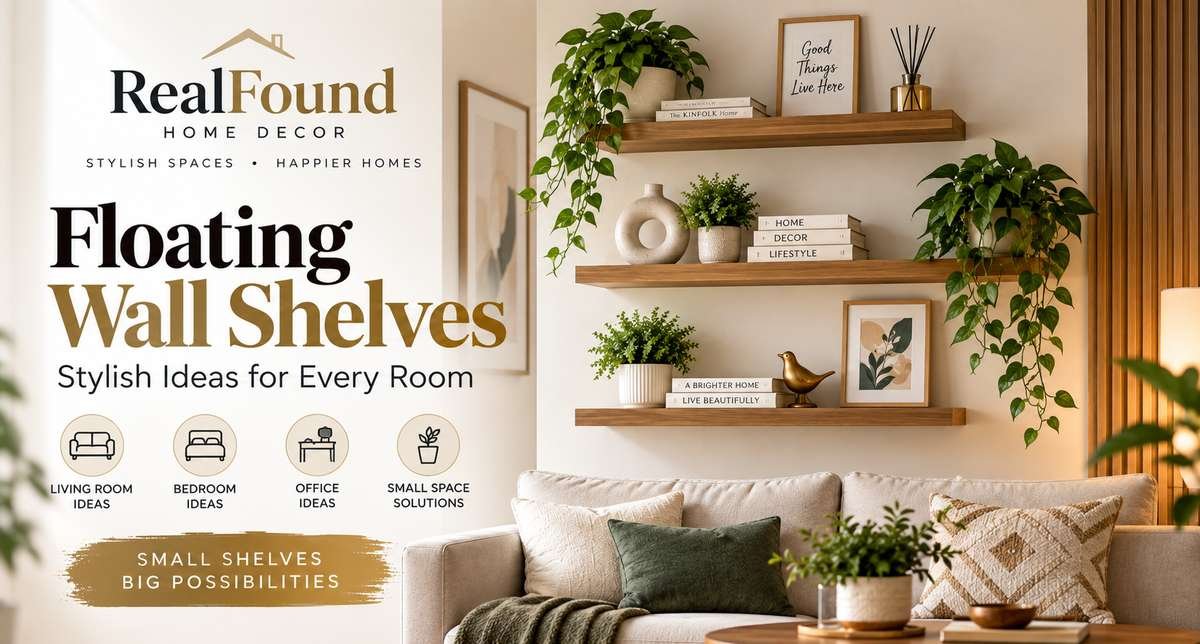
A blank wall can make a room feel unfinished, but you do not always need large furniture or an expensive makeover to change it. Floating wall shelves offer a simple way to add decoration, storage, and personality while keeping valuable floor space open.
You can use them in almost any room. Display books in the living room, plants in the bedroom, small accessories in the entryway, or everyday items in a home office.
The key is to choose the right shelf, place it carefully, and style it without creating unnecessary clutter.
What Are Floating Wall Shelves?
Floating wall shelves are shelves designed to create a clean, streamlined appearance without visible traditional brackets.
Because they attach directly to the wall, they can create a lighter look than bulky shelving units. Their simple design also works with many interior styles, including modern, minimalist, contemporary, and rustic spaces.
Floating shelves can serve two purposes at once. They give you a place to display decorative items while also making better use of vertical wall space.
Why Use Floating Wall Shelves at Home?
One of the biggest advantages of floating shelves is their versatility.
They can help you:
- Decorate an empty wall
- Display books and photographs
- Showcase plants and vases
- Organize small accessories
- Save floor space
- Create a room focal point
- Add visual height to a wall
- Refresh a room without major renovations
They also make it easier to change your décor over time. You can replace a few accessories and create a completely different look without replacing the shelf itself.
1. Create a Stylish Living Room Display
The living room is one of the best places to use floating shelves.
Install one or several shelves on an empty wall and create a balanced display with objects that complement the rest of the room.
Try combining:
- Small plants
- Books
- Decorative vases
- Framed photographs
- Small sculptures
- Candles
- Personal objects
Avoid placing too many items together. A little empty space helps each piece stand out.
If your living room already has several decorative elements, keep the shelf display simple. A few carefully selected pieces can create a more polished result than a crowded arrangement.
2. Use Shelves for Bedroom Decor
Floating wall shelves can add character to a bedroom without taking up valuable floor space.
Place a shelf above a dresser, beside a wardrobe, or on another suitable wall. Use it to display small plants, photographs, books, or decorative accessories.
For a relaxing bedroom, choose accessories with soft colors and natural textures.
You can also create a small reading display with a few favorite books and a decorative light or plant.
Before installing a shelf above a bed or another area where people may sit or sleep, make sure the mounting method is appropriate for the wall and intended load.
3. Turn an Empty Hallway Wall Into a Feature
Hallways often have unused wall space.
A narrow floating shelf can turn that empty area into a small decorative feature. Add a vase, framed photograph, or another compact accessory.
Do not overload a hallway shelf. People need enough space to move comfortably, and a simple display can make the area feel more intentional.
A mirror placed nearby can also complement the arrangement and help create a brighter, more open appearance.
4. Build a Small Home Office Display
Your home office does not have to look purely functional.
Floating shelves can provide space for books, stationery, plants, framed artwork, and other small items.
Use the shelves to keep frequently used items within reach while leaving the desk surface clear.
For a clean workspace, group similar items together. Keep paperwork and everyday supplies organized instead of mixing them with decorative pieces.
A simple shelf arrangement can make a home office feel more personal without affecting productivity.
5. Style Shelves With Plants
Plants are an easy way to add life to a shelf display.
Small indoor plants can soften hard surfaces and introduce natural color. If you do not want to maintain live plants, decorative greenery can create a similar visual effect.
Vary the height of your plants and accessories. For example, place a taller plant beside a shorter vase or a stack of books.
This creates visual movement and prevents the shelf from looking flat.
Always consider the amount of light available before choosing live plants.
6. Display Books in a Creative Way
Books do not have to stay hidden inside a cabinet.
Use floating shelves to turn your favorite books into part of your décor.
You can stack a few books horizontally and place a small decorative item on top. You can also arrange several books vertically and use an accessory as a visual divider.
Try grouping books by size or color if you want a more organized appearance.
The goal is to create a display that looks intentional while keeping the books easy to access.
7. Add Decorative Vases and Accessories
A floating shelf provides an excellent backdrop for small decorative accessories.
A vase can add height. A small sculpture can add personality. A framed picture can introduce color. A candle holder can add texture.
Instead of buying many new products, look around your home first. You may already have several pieces that work together.
A useful styling formula is to combine different heights, shapes, and textures while keeping the overall color palette connected.
8. Create a Minimalist Shelf Arrangement
Minimalist décor works especially well with floating shelves.
Start with one or two larger pieces rather than filling the shelf with small objects.
For example, you could use:
- One small plant
- One decorative vase
- Two or three books
- One framed photograph
Leave visible space between the items.
This creates a clean appearance and allows the wall itself to remain part of the design.
9. Combine Multiple Floating Shelves
One shelf can create a simple accent. Multiple shelves can create a larger wall feature.
You can install shelves in a straight vertical arrangement, place them at different heights, or create an asymmetrical display.
Before drilling into the wall, mark the planned positions with removable tape. Step back and view the arrangement from different angles.
This simple step can help you identify spacing problems before you make permanent holes.
10. Choose the Right Shelf Size
Size is one of the most important factors when buying floating wall shelves.
A shelf should work with the wall and the items you plan to display.
Consider:
Length: Make sure the shelf fits the available wall area.
Depth: Check that it can hold the items you want without extending too far into the room.
Weight capacity: Verify the product specifications and use suitable mounting hardware.
Material: Choose a material that works with your existing furniture and décor.
Color: Select a finish that complements your room rather than competing with it.
Always check the exact product dimensions before ordering.
How to Style Floating Wall Shelves Without Clutter
A shelf can quickly become messy when every available space is filled.
Instead, use a simple approach.
Start with your largest item. Then add smaller pieces around it.
Mix different shapes and heights. Add one natural element, such as a plant or wooden accessory, to soften the arrangement.
Finally, step back and look at the shelf from across the room.
If it feels crowded, remove one or two items.
Sometimes the best improvement is simply creating more empty space.
Floating Shelves for Small Spaces
Small homes and apartments can benefit greatly from vertical storage.
Instead of adding another floor-standing cabinet, use wall space where appropriate.
Floating shelves can provide room for books, decorative accessories, plants, and small everyday items without occupying valuable floor area.
They can also make a small room feel more organized when you avoid overfilling them.
For compact spaces, choose shelves with a suitable depth and keep the display visually light.
What to Consider Before Installing Wall Shelves
Good design starts with safe and practical installation.
Before mounting a shelf, consider:
Wall type
Different walls require different mounting methods. Identify whether you have drywall, plaster, masonry, or another wall material.
Intended load
Think about what you plan to place on the shelf. Heavy books require more support than lightweight decorative objects.
Position
Make sure the shelf does not interfere with doors, windows, furniture, switches, or walking areas.
Level placement
Use a level during installation so the finished shelf does not appear tilted.
Product instructions
Follow the manufacturer’s installation instructions and recommended hardware.
If you are unsure about the wall structure or load requirements, consult a qualified professional.
How Floating Wall Shelves Can Refresh Your Home
You do not need to redesign an entire room to make it feel new.
An empty wall can become a useful decorative feature with the right floating shelf and a few carefully selected accessories.
Use shelves to display things you already love, introduce plants and artwork, organize small items, or create a focal point in a room.
The most successful displays are usually not the ones with the most decorations. They are the ones where every piece has a purpose.
Find Decorative Wall Shelves for Your Home
If you are looking for a simple way to add style and function to your walls, explore the decorative wall shelves at RealFound.
Choose a design that fits your available space, measure carefully, and style it with accessories that reflect your personality.
From living rooms and bedrooms to offices and hallways, the right wall shelf can turn unused vertical space into part of your home’s design.
A beautiful home does not always require a major transformation. Sometimes, one well-placed shelf is enough to start something new.