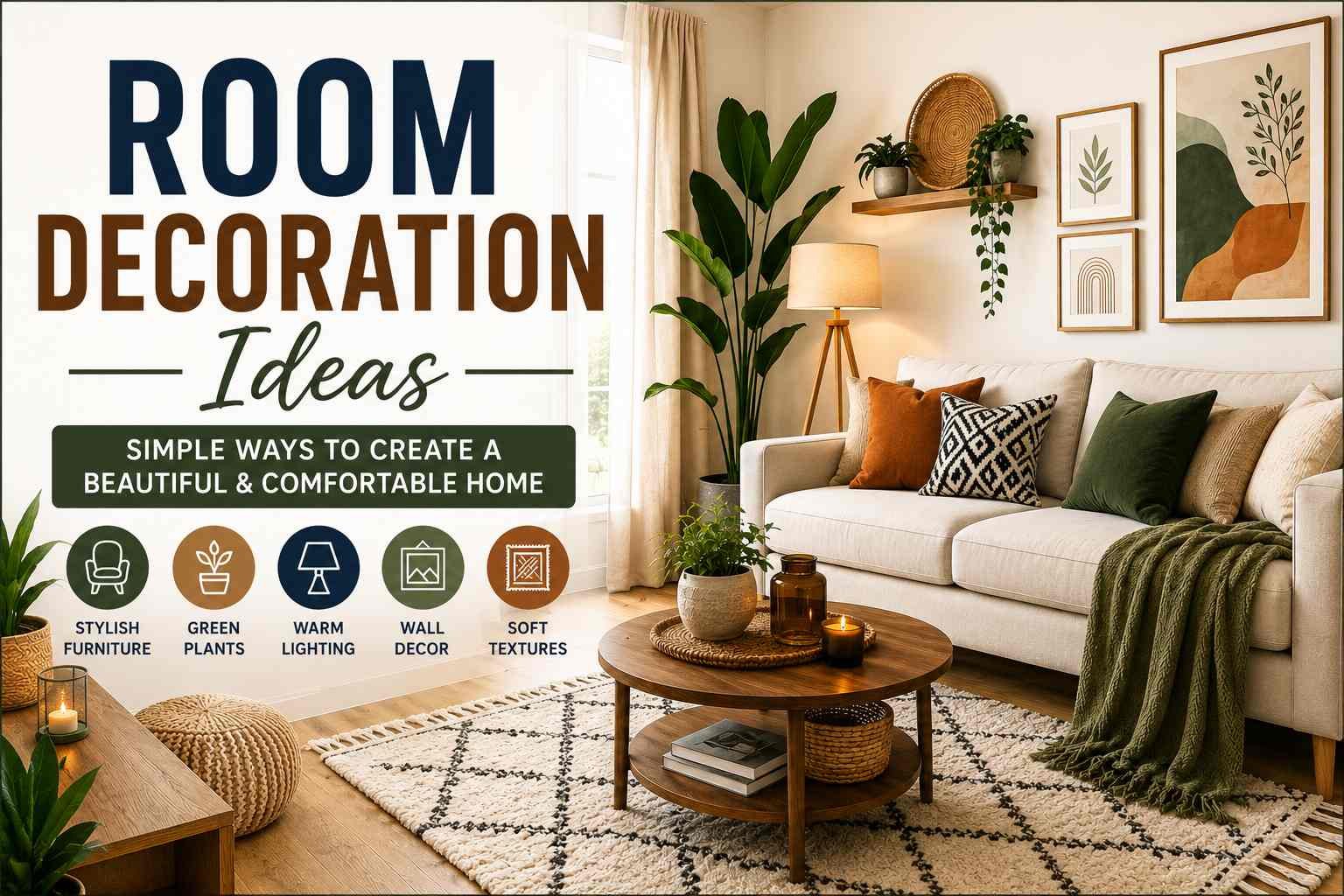
A well-decorated room can completely change the way a home feels. You do not always need expensive furniture or a major renovation to create an attractive space. With thoughtful room decoration, the right colors, comfortable furniture, decorative accessories, and a few carefully selected details, almost any room can feel more stylish and welcoming.
Whether you are decorating a new home, refreshing your bedroom, updating your living room, or simply looking for affordable decoration ideas, small changes can make a significant difference.
In this guide, we will explore practical room decoration ideas that work for different styles, room sizes, and budgets.
What Is Room Decoration?
Room decoration is the process of improving the appearance, comfort, and atmosphere of an interior space by using furniture, colors, lighting, artwork, rugs, curtains, plants, and decorative accessories.
Good decoration is not simply about filling a room with beautiful objects. The goal is to create a balanced space where everything works together.
For example, a modern room might use neutral colors, clean furniture, simple artwork, and minimal accessories. A cozy room may combine warm colors, soft textiles, wooden furniture, rugs, and decorative lighting.
The best approach depends on your personal taste and how you use the room.
1. Start With a Room Decoration Plan
Before purchasing anything, take a moment to understand the room.
Consider the size of the space, the amount of natural light, the existing furniture, and the purpose of the room. A bedroom requires a different decoration strategy than a home office or living room.
Make a simple list of what you want to change. You may only need a new rug, curtains, wall art, lighting, or decorative accessories rather than replacing everything.
Planning first can also help you avoid buying items that do not work well together.
2. Choose a Consistent Color Palette
Color is one of the most important elements of interior decoration.
Instead of using too many unrelated colors, choose a small palette that creates harmony throughout the room. Neutral shades such as white, cream, beige, gray, and warm brown provide a flexible foundation.
You can then introduce stronger colors through cushions, rugs, artwork, curtains, or decorative objects.
For a relaxing bedroom, soft neutral and earthy shades can create a peaceful atmosphere. In a living room, deeper accent colors can add personality without overwhelming the space.
The key is to repeat selected colors in different parts of the room so the overall design feels connected.
3. Make the Furniture Work for the Space
Furniture should match the size and layout of the room.
Large furniture in a small room can make the space feel crowded, while very small furniture in a large room may make it feel unfinished.
Measure the available space before purchasing major furniture. Leave enough room for comfortable movement around sofas, beds, tables, and other pieces.
In smaller homes and apartments, multifunctional furniture can be especially useful. Storage ottomans, nesting tables, beds with storage, and compact desks can provide both functionality and style.
4. Use Rugs to Add Warmth and Texture
A rug can be one of the easiest ways to improve room decoration.
Area rugs can visually connect furniture while adding softness, texture, and color. They are particularly useful in living rooms, bedrooms, dining areas, and home offices.
For a living room, choose a rug that is large enough to visually anchor the main seating area. In a bedroom, a soft rug around the bed can create a warmer and more comfortable environment.
If the furniture and walls are relatively simple, a patterned rug can become a focal point. If the room already contains bold patterns, a neutral rug may provide better balance.
5. Improve the Room With Lighting
Lighting can dramatically influence the appearance of a decorated room.
Instead of relying on one ceiling light, consider using several layers of lighting. A combination of ceiling lighting, table lamps, floor lamps, and accent lighting can create a more comfortable atmosphere.
Warm lighting is often suitable for bedrooms and living rooms because it creates a relaxed feeling. Brighter lighting can be useful for workspaces, kitchens, and areas where detailed tasks are performed.
Decorative lamps can also become part of the room’s design rather than simply serving a practical purpose.
6. Add Plants and Natural Elements
Plants are an easy way to introduce life and natural color into a room.
Large plants can fill an empty corner, while smaller plants can be placed on shelves, tables, or cabinets. If maintaining real plants is difficult, high-quality artificial plants can provide a similar decorative effect.
You can also introduce natural materials through wood, woven baskets, jute, cotton, linen, and other textured materials.
Combining different natural textures can make a room feel warmer without requiring a complicated design.
7. Decorate the Walls Without Overcrowding Them
Walls provide an excellent opportunity to personalize a room.
Artwork, mirrors, framed photographs, wall shelves, and decorative panels can all contribute to a room’s appearance.
A large piece of artwork above a sofa or bed can create a strong focal point. Alternatively, several smaller frames can be arranged as a gallery wall.
Mirrors are particularly useful in smaller rooms because they reflect light and can make the space appear more open.
However, avoid decorating every wall with multiple objects. Leaving some empty wall space can make the overall design feel cleaner.
8. Make Your Bedroom Comfortable
Bedroom decoration should focus on both appearance and comfort.
Start with comfortable bedding and then build the design around it. Add pillows, a soft throw blanket, bedside lighting, curtains, and a suitable rug.
Neutral colors can create a calm environment, while subtle patterns can add visual interest.
Keep unnecessary objects away from the bedside area to maintain a clean appearance. A few carefully selected decorative pieces usually work better than a large collection of unrelated accessories.
9. Create a Welcoming Living Room
The living room is often the main social space in a home, so its decoration should feel comfortable and inviting.
Arrange the furniture to encourage conversation rather than simply placing everything against the walls.
A coffee table, area rug, cushions, curtains, plants, and artwork can help connect the different elements of the room.
If you have an open-plan home, use rugs and furniture arrangements to visually separate the living area from dining or work areas.
10. Use Decorative Accessories Carefully
Accessories can give a room personality, but too many can create visual clutter.
Consider using a small selection of decorative items such as:
- Decorative vases
- Candles
- Table lamps
- Books
- Picture frames
- Decorative trays
- Baskets
- Sculptural objects
- Cushions
- Throw blankets
- Indoor plants
Try grouping accessories in different heights and textures. This creates more visual interest than placing similarly sized objects next to one another.
11. Make Small Rooms Feel Larger
Small rooms can still have beautiful decoration.
Choose furniture that fits the scale of the room and avoid blocking windows or natural light. Light-colored walls and reflective surfaces can help maintain an open feeling.
Using furniture with exposed legs can also create a sense of visual space because more of the floor remains visible.
Another useful technique is to choose one or two larger decorative pieces rather than filling the room with many small objects.
12. Refresh Your Room Without Spending Too Much
You do not need a large budget for effective room decoration.
Start with changes that provide the biggest visual impact. Rearranging furniture, changing cushion covers, adding a rug, updating curtains, introducing plants, or replacing outdated lighting can refresh a room without a complete makeover.
You can also move decorative items between rooms. A lamp, mirror, artwork, or vase that feels ordinary in one room may look completely different in another location.
Shopping thoughtfully and choosing versatile pieces can help you achieve a stylish look while controlling costs.
13. Choose a Decoration Style
Having a general design style can make decorating easier.
Popular room decoration styles include:
Modern
Modern rooms usually emphasize clean lines, simple furniture, neutral colors, and limited decoration.
Minimalist
Minimalist decoration focuses on simplicity, functionality, and keeping unnecessary items out of the room.
Bohemian
Bohemian interiors often combine patterns, plants, textiles, natural materials, and colorful decorative accessories.
Traditional
Traditional decoration can include classic furniture, elegant fabrics, artwork, warm colors, and timeless accessories.
Scandinavian
Scandinavian-inspired rooms commonly use light colors, natural materials, simple furniture, and comfortable textures.
You do not have to follow one style perfectly. Combining elements from different styles can create a more personal home.
14. Keep Functionality in Mind
Beautiful decoration should also be practical.
Think about how you actually use the room before selecting decorative products. A delicate coffee table may not be ideal for a busy family room, while a high-maintenance rug may not be practical for a high-traffic area.
Choose materials and products that match your lifestyle.
A successful room is one that looks good while remaining comfortable and easy to use.
15. Add Your Personal Touch
The best room decoration reflects the people who live there.
Display meaningful photographs, artwork, travel souvenirs, books, handmade objects, or other items that have personal significance.
Your home should not look like a showroom. A few personal details can make a professionally styled room feel more authentic and welcoming.
Final Thoughts
Great room decoration does not require a huge budget or a complete renovation. The right combination of color, furniture, lighting, rugs, plants, artwork, and accessories can transform an ordinary room into a comfortable and attractive space.
Start by understanding your room, choose a consistent color palette, select furniture that fits the available space, and add decorative elements gradually. Most importantly, choose pieces that match your lifestyle and personal taste.
Whether you are refreshing a bedroom, creating a cozy living room, decorating a small apartment, or updating your entire home, thoughtful decoration can make your space feel more comfortable, functional, and uniquely yours.
For more home décor inspiration and stylish products, explore RealFound and discover ideas that can help you create a home you enjoy every day.