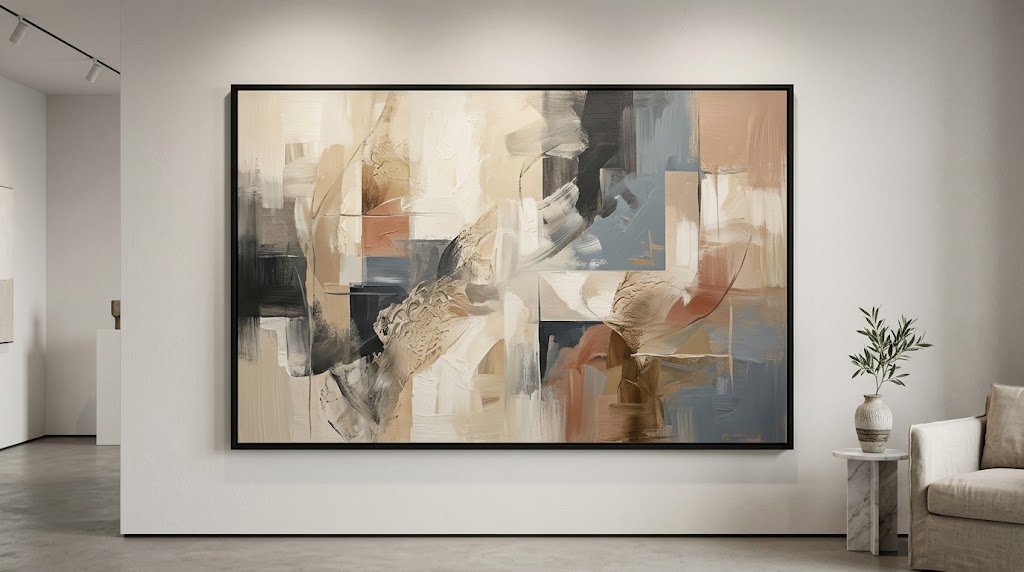
The right frame can change how artwork is experienced. It can define the edges of a painting, add visual structure, protect the artwork, and create a finished presentation. For this reason, framed wall art remains a popular choice for people who want artwork that feels complete and ready to display.
From contemporary paintings in slim black frames to colorful artwork surrounded by natural wood, framed pieces are available in many combinations. The frame does not have to compete with the artwork. Ideally, it should support the composition and help the painting stand out.
At RealFound, exploring artwork is about more than selecting an image. Size, artistic style, color, texture, and presentation all contribute to how a piece looks when displayed.
What Is Framed Wall Art?
Framed wall art is artwork presented inside a surrounding frame. The artwork itself can be a painting, print, photograph, illustration, abstract composition, or another artistic medium.
Frames can be made from materials such as wood, metal, composite materials, or other manufactured finishes. Their appearance can range from extremely minimal to highly decorative.
A simple frame can allow the artwork to remain the main focus, while a more distinctive frame can become part of the overall composition.
Why Choose Framed Wall Art?
One of the main advantages of framed artwork is presentation.
A frame can:
- Give artwork a finished appearance
- Define the visual boundaries of a piece
- Create contrast around the artwork
- Complement the surrounding color palette
- Add structure to a wall arrangement
- Make artwork easier to integrate into a collection
Framing can also influence the perceived character of a painting. The same artwork can feel very different when displayed in a thin black frame, natural wood frame, or metallic finish.
Popular Framed Wall Art Styles
There is no single style that defines framed artwork. The frame and artwork should work together.
Modern Framed Wall Art
Modern framed artwork often uses simple frame profiles and contemporary compositions.
Black, charcoal, natural wood, and subtle metallic finishes can work particularly well with modern paintings.
The goal is usually to create a clean presentation without unnecessary decorative details.
Framed Abstract Art
Abstract paintings can look especially striking when paired with a frame that provides a clear visual boundary.
A simple frame can help define expressive brushwork, geometric forms, layered colors, and textured surfaces.
For colorful abstract artwork, a restrained frame may prevent the overall composition from becoming visually overwhelming.
Framed Botanical Artwork
Botanical paintings and prints can work with both contemporary and traditional frames.
Natural wood can reinforce an organic visual character, while black framing can create stronger contrast around leaves, flowers, and botanical forms.
Framed Landscape Art
Landscape artwork often benefits from framing because the frame can visually separate the scenic composition from its surroundings.
Depending on the painting, a darker frame may emphasize dramatic scenery, while a lighter wood finish can create a softer presentation.
How to Choose the Right Frame Color
Frame color should support the artwork rather than automatically match the furniture or wall.
Black Frames
Black frames create strong definition and can work well with modern, abstract, monochrome, and photographic artwork.
They are particularly useful when you want the edges of the artwork to be clearly visible.
Natural Wood Frames
Wood frames can introduce warmth and an organic quality.
Different wood tones produce different effects, from pale contemporary finishes to darker traditional appearances.
White or Light Frames
Light-colored frames can create a softer transition between the artwork and a pale wall.
They can work particularly well with minimalist compositions and light-toned artwork.
Metallic Frames
Gold, brass, silver, and other metallic finishes can introduce a decorative element.
These frames need to be considered carefully, especially when the artwork already contains strong colors or complex details.
Consider the Artwork Before the Frame
It is easy to focus too much on the frame because it is physically visible around the artwork.
However, the painting should remain the primary consideration.
Look at:
- Main colors
- Composition
- Artistic style
- Texture
- Subject
- Overall visual weight
Then choose a frame that supports those characteristics.
For example, a heavily textured abstract painting may benefit from a simple frame, while a restrained minimalist artwork may allow more flexibility in the frame design.
Choosing the Correct Size
Frame dimensions should be considered together with the artwork itself.
When shopping for framed wall art, check whether the listed dimensions refer to the artwork only or the complete framed piece.
This distinction matters because the final wall footprint can be larger than the image area.
For larger artwork, measure the available wall space before ordering. You can also use masking tape to outline the approximate outer dimensions on the wall.
This gives you a much better idea of how the framed piece will appear at its actual size.
Large Framed Wall Art
Oversized framed artwork has become increasingly visible in contemporary design coverage, particularly when one substantial piece is used as a focal point.
A large framed painting can give a wide wall a strong visual anchor without requiring many smaller pieces.
This approach works particularly well when the artwork has a clear composition and enough surrounding space to breathe.
When choosing large framed artwork, pay close attention to both the painting dimensions and the outside frame dimensions.
Framed Art vs. Unframed Canvas
Both options can produce attractive results, but they create different visual effects.
Framed artwork generally has a more defined presentation. The frame creates a clear border and can add another design element.
Unframed canvas can feel more relaxed and contemporary, particularly when the artwork continues around the edges.
Your choice can depend on the artistic style, desired presentation, and where the artwork will be displayed.
How to Create a Modern Framed Art Arrangement
Framed artwork does not always have to be displayed as one large piece.
You can create a collection using several pieces with relationships in:
- Color
- Frame finish
- Subject
- Artistic style
- Size
- Theme
Current 2026 trend coverage also describes gallery walls as becoming more personal and less dependent on perfectly matched frames or rigid grids.
That means different artworks can work together without looking identical.
A useful approach is to choose one unifying element—such as a shared color palette or similar frame tone—while allowing the individual artwork to remain different.
How Much Space Should Be Around Framed Artwork?
Artwork needs visual breathing room.
If several framed pieces are placed too close together, they may appear crowded. Excessive spacing, however, can make a collection feel disconnected.
For a single large artwork, leave enough surrounding wall area for the piece to remain visually distinct.
For multiple pieces, arrange them on the floor first or create paper templates before putting nails into the wall.
This makes it easier to experiment with different layouts.
Buying Framed Wall Art Online
Online shopping makes it easy to compare many artistic styles, but photographs cannot show every physical detail.
Before purchasing, check:
- Complete dimensions
- Artwork dimensions
- Frame material
- Frame color and finish
- Glass or acrylic details, if applicable
- Mounting hardware
- Artwork material
- Texture information
- Shipping and packaging
- Return conditions
At RealFound, product information should be considered alongside the artwork photographs so you have a clearer understanding of what you are selecting.
Should You Choose Matching Frames?
Matching frames can create a structured appearance, but they are not required.
A collection can feel more personal when frame finishes vary slightly.
For example, natural wood and matte black can sometimes work together when the artwork shares a consistent color palette.
The important thing is to create a visual relationship rather than making every element identical.
Final Thoughts
Framed wall art combines artwork with presentation, giving you another opportunity to shape the visual character of a piece. The right frame can emphasize colors, define the composition, and help artwork feel integrated into its surroundings.
When choosing framed artwork, consider the painting first, then look at frame color, material, proportions, and overall dimensions. If you are buying online, always check whether listed measurements include the frame.
Whether you choose one oversized framed painting or build a more personal collection of several pieces, thoughtful framing can make artwork feel more intentional.
Explore different paintings, compare frame styles, and choose a combination that reflects your own artistic taste rather than simply following a temporary trend.